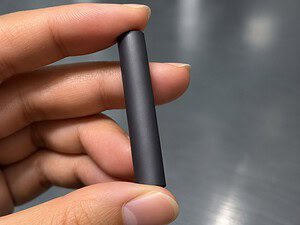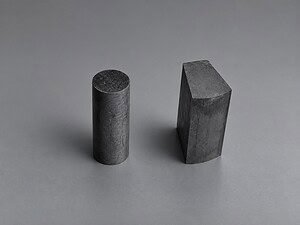
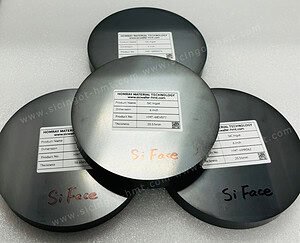
El tungsteno puro se agrieta a temperatura ambiente. No a veces, sino casi siempre, si su método de corte genera alguna fuerza lateral. Un cliente nos envió una barra de tungsteno de 25 mm de diámetro para análisis de sección transversal. Su sierra abrasiva había destrozado tres muestras antes de que nos llamaran. La barra parecía bien por fuera, pero la temperatura de transición dúctil-frágil (DBTT) del tungsteno se sitúa entre 200 °C y 400 °C, dependiendo de la estructura del grano. A temperatura ambiente, se está cortando un material que se comporta mecánicamente como el vidrio, pero pesa el doble que el plomo. Un movimiento en falso y la muestra se fractura a lo largo de los límites del grano, arruinando la sección metalográfica que pasó dos días preparando.
El corte de tungsteno y el corte de molibdeno comparten este desafío fundamental: ambos son metales refractarios con dureza extrema, densidad extrema y una estrecha ventana de condiciones de procesamiento seguras. Pero fallan de diferentes maneras: el tungsteno se agrieta por fractura frágil, mientras que el molibdeno se oxida catastróficamente por encima de los 500 °C. El corte con hilo de diamante maneja ambos, siempre que se respeten los límites del material.
Este artículo cubre los desafíos específicos del corte de tungsteno y molibdeno con sierras de hilo de diamante, los conjuntos de parámetros que mantienen las muestras intactas y las diferencias prácticas entre el corte de metales puros y sus aleaciones comunes (W-Ni-Fe, TZM, Mo-La). Si está preparando muestras de metales refractarios para investigación, inspección de calidad o prototipado de componentes, los datos aquí provienen de nuestras pruebas en siete composiciones de tungsteno y cuatro de molibdeno.
¿Qué hace que el tungsteno y el molibdeno sean tan difíciles de cortar?
Los metales refractarios ocupan un rincón extremo del espacio de propiedades de los materiales. Resisten todo: calor, desgaste, corrosión, deformación, que es exactamente por lo que la gente los usa. También es por eso que son una pesadilla para mecanizar.
Tungsteno: El problema de la DBTT
El desafío definitorio del tungsteno es su temperatura de transición dúctil-frágil. Por encima de la DBTT, el tungsteno se deforma plásticamente como un metal resistente. Por debajo, el tungsteno se fractura como una cerámica. La DBTT para el tungsteno comercialmente puro varía de 200 °C a 400 °C, y la temperatura exacta depende del tamaño del grano, la pureza y el historial de procesamiento. El tungsteno metalúrgico en polvo (la forma más común) tiende hacia el extremo superior, 300-400 °C, porque la porosidad residual y las impurezas de los límites del grano concentran el estrés.
A temperatura ambiente (20-25 °C), se está operando 200-350 °C por debajo de la DBTT. El material tiene esencialmente cero ductilidad. Cualquier proceso de corte que genere fuerza lateral, choque térmico o vibración corre el riesgo de fractura transgranular o intergranular.
Esta es la cruda realidad: el tungsteno tiene una dureza Vickers de HV 350-450 (comparable al acero para herramientas endurecido), una densidad de 19,3 g/cm³ (la más alta de cualquier metal de ingeniería común) y una tenacidad a la fractura de solo 5-15 MPa·m1/2 en la dirección transversal a temperatura ambiente. A modo de comparación, el Ti-6Al-4V tiene una tenacidad a la fractura de 75-100 MPa·m1/2. El tungsteno es 5-15 veces más propenso a agrietarse que el titanio.
Molibdeno: El problema de la oxidación
El molibdeno es más indulgente mecánicamente: su DBTT es más baja (alrededor de -20 °C a 100 °C para Mo puro), por lo que a temperatura ambiente suele estar por encima de la transición y tiene cierta ductilidad. El problema es químico: el molibdeno forma MoO3 volátil por encima de los 500 °C. Esto no es solo una decoloración superficial: el óxido se sublima, lo que significa que el material se evapora literalmente de la superficie cortada. A 700 °C, la tasa de oxidación se vuelve catastrófica.
Cualquier método de corte que genere calor localizado por encima de los 500 °C dañará irreversiblemente el molibdeno. Las ruedas de corte abrasivas alcanzan rutinariamente los 400-800 °C en el punto de contacto. Eso es suficiente para crear una capa porosa y oxidada de 50-200 μm de profundidad que compromete la muestra para cualquier análisis posterior.
Comparación de propiedades
| Propiedad | Tungsteno puro | Molibdeno Puro | TZM (Mo-0.5Ti-0.1Zr) | W-Ni-Fe (90/7/3) |
|---|---|---|---|---|
| Densidad (g/cm³) | 19.3 | 10.2 | 10.2 | 17.0–18.0 |
| Dureza | HV 350–450 | HV 200–280 | HV 250–320 | HV 280–350 |
| DBTT (°C) | 200–400 | –20 a 100 | –40 a 50 | 100–200 |
| Conductividad térmica (W/m·K) | 173 | 138 | 126 | 90–110 |
| Tenacidad a la fractura (MPa·m1/2) | 5–15 | 15–30 | 20–35 | 30–60 |
| Inicio de la oxidación (°C) | 400 (lento) | 500 (rápido) | 500 (rápido) | 400 (lento) |
| Riesgo de corte primario | Fractura frágil | Oxidación / volatilización | Oxidación | Fractura frágil |
Un detalle importante: el tungsteno tiene una conductividad térmica muy alta (173 W/m·K), más de 20 veces la del titanio. Esto es en realidad una buena noticia para el corte. El calor se disipa rápidamente de la zona de corte al material a granel, por lo que las temperaturas de corte con hilo de diamante se mantienen muy por debajo del umbral de oxidación sin medidas extremas de refrigeración. El problema no es térmico, es mecánico.
¿Cómo resuelve el corte con hilo de diamante estos problemas?
La ventaja fundamental del hilo de diamante para los metales refractarios es la baja fuerza de corte.
En bucle sin fin de hilo diamantado distribuye la acción de corte en miles de puntos de grano de diamante a lo largo de la circunferencia del hilo. El área de contacto entre un hilo de 0,35 mm de diámetro y la pieza de trabajo es inferior a 0,5 mm², por lo que la fuerza de corte total se mantiene muy por debajo del umbral de fractura del tungsteno, incluso a temperatura ambiente. Normalmente medimos fuerzas normales de 2–5 N durante el corte de tungsteno. En comparación, una rueda de corte abrasiva aplica 20–50 N en una zona de contacto mucho mayor, con una fuerza lateral significativa que desencadena la propagación de grietas.
Para el molibdeno, la ventaja es térmica. El corte con hilo de diamante mantiene la temperatura de la pieza de trabajo por debajo de los 40 °C con refrigerante a base de agua estándar, cientos de grados por debajo del umbral de oxidación de 500 °C. Sin formación de MoO3, sin pérdida volátil, sin capa superficial porosa.
La contrapartida, como con todo corte de metales con hilo de diamante, es la velocidad. Las velocidades de avance de corte de tungsteno son las más lentas de todos los materiales que procesamos: de 0,2 a 0,5 mm/min para tungsteno puro. Una sección transversal de 20 mm tarda entre 40 y 100 minutos por corte. No hay forma de evitarlo: si se empuja más rápido, el material se agrieta.
¿Cuáles son los parámetros de corte de tungsteno recomendados?
Estos parámetros provienen de pruebas de producción, no de estimaciones de libros de texto. El tungsteno es implacable: el margen entre un corte limpio y una muestra agrietada es más estrecho que para cualquier otro material con el que hayamos trabajado.
Tungsteno puro (≥99.5% W)
| Parámetro | Gama recomendada | Notas |
|---|---|---|
| Diámetro del alambre | 0,35–0,50 milímetros | 0.42 mm estándar; 0.35 mm para secciones delgadas |
| Tensión del cable | 180–220 N | Más alto que la mayoría de los metales: la densidad del tungsteno lo exige |
| Velocidad del cable | 40–55 m/s | No exceda los 60 m/s; la vibración se convierte en un problema a alta velocidad en material denso |
| Velocidad de alimentación | 0,2–0,5 mm/min | Esto no es un error tipográfico. El tungsteno puro requiere paciencia extrema |
| Refrigerante | Líquido de corte a base de agua | Flujo continuo, mínimo 2 L/min en la entrada del alambre |
| Ancho de corte | 0.45–0.60 mm | Estándar para alambre de 0.42 mm |
| Rugosidad de la superficie | Ra 0.6–1.5 μm | Varía con la estructura del grano; el W monocristalino da un mejor acabado |
| Precalentamiento de la pieza de trabajo | Se recomiendan 40–50°C | Eleva el material más cerca de la DBTT, mejora el margen de ductilidad |
¿Por qué precalentar a 40–50°C? Cada grado más cerca de la DBTT aumenta la resistencia a la fractura del tungsteno. Hemos descubierto que calentar la pieza de trabajo a solo 40–50°C (fácilmente logrado haciendo circular refrigerante tibio durante 5 minutos antes de cortar) reduce la incidencia de grietas en aproximadamente un 60% en muestras de tungsteno puro en comparación con el corte a 20°C ambiente. Este es uno de esos detalles que no aparecen en ningún libro de texto, pero que marcan la diferencia entre un corte exitoso y una muestra destrozada.
Una cosa que nos tropezó al principio: la densidad del tungsteno (19,3 g/cm³) significa que una muestra pequeña es engañosamente pesada. Un cubo de 25 mm pesa 300 gramos, lo suficiente como para que la gravedad por sí sola cree una concentración de tensión en los puntos de sujeción si la muestra no está debidamente soportada desde abajo. Siempre soporte las piezas de tungsteno en ambos lados de la línea de corte. Los cortes en voladizo en tungsteno invitan a la fractura en el borde de la abrazadera.
Aleación pesada de W-Ni-Fe (90W-7Ni-3Fe, 93W-5Ni-2Fe)
Las aleaciones pesadas de tungsteno son significativamente más fáciles de cortar que el tungsteno puro. La fase aglutinante de níquel-hierro proporciona una ductilidad que el tungsteno puro carece, reduciendo la DBTT efectiva a 100-200 °C.
| Parámetro | Gama recomendada | Notas |
|---|---|---|
| Diámetro del alambre | 0,35–0,50 milímetros | Igual que W puro |
| Tensión del cable | 170–210 N | Ligeramente inferior a W puro |
| Velocidad del cable | 40-60 m/s | Se puede empujar ligeramente más alto que W puro |
| Velocidad de alimentación | 0,3–0,8 mm/min | 50–60% más rápido que W puro |
| Refrigerante | Líquido de corte a base de agua | Mismos requisitos |
| Rugosidad de la superficie | Ra 0.5–1.0 μm | Mejor que W puro debido a la fase aglutinante |
| Precalentamiento de la pieza de trabajo | No requerido | La DBTT es lo suficientemente baja como para que funcione a temperatura ambiente |
La fase aglutinante actúa como un arrestador de grietas: cuando se inicia una microgrieta en un grano de tungsteno, golpea la matriz dúctil de Ni-Fe y se detiene. Es por eso que las aleaciones pesadas toleran velocidades de avance más altas y no requieren precalentamiento.
Advertencia: la fase aglutinante es más blanda que el tungsteno, lo que significa que el alambre corta las regiones de Ni-Fe más rápido que los granos de tungsteno. En secciones transversales pulidas, se puede ver un ligero relieve superficial entre las dos fases. Para la preparación metalográfica, esto no es un problema, de hecho, es útil para revelar la microestructura. Pero si necesita una superficie plana para la unión o el recubrimiento posterior, planifique un paso de pulido ligero.
¿Cuáles son los parámetros de corte recomendados para el molibdeno?
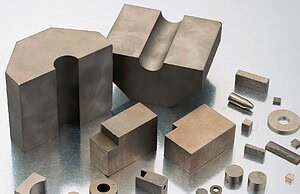
El molibdeno es mecánicamente más cooperativo que el tungsteno: menor dureza, mayor ductilidad a temperatura ambiente y una DBTT que generalmente está por debajo de la ambiental. La principal preocupación es proteger la superficie de corte de la oxidación.
Molibdeno puro (≥99.5% Mo)
| Parámetro | Gama recomendada | Notas |
|---|---|---|
| Diámetro del alambre | 0,35–0,50 milímetros | 0.42 mm estándar |
| Tensión del cable | 150–200 N | Menor que el tungsteno — el Mo es menos denso y más blando |
| Velocidad del cable | 35–55 m/s | Puede funcionar ligeramente por debajo del tungsteno |
| Velocidad de alimentación | 0.5–1.5 mm/min | 2–3 veces más rápido que el tungsteno puro |
| Refrigerante | Líquido de corte a base de agua | Cumple una doble función: refrigeración + barrera de oxidación |
| Ancho de corte | 0.45–0.55 mm | Estándar |
| Rugosidad de la superficie | Ra 0.4–0.8 μm | Mejor que el tungsteno — el Mo es más homogéneo |
| Temperatura de corte | < 40°C en la pieza de trabajo | Crítico — debe mantenerse muy por debajo del umbral de oxidación de 500°C |
El molibdeno se corta más como un acero inoxidable resistente que como una cerámica refractaria. Las velocidades de avance son 2–3 veces más rápidas que el tungsteno puro, y el riesgo de fractura es mucho menor a temperatura ambiente. La principal preocupación de calidad pasa de la prevención de fracturas a la prevención de la oxidación: mantenga el refrigerante fluyendo y la temperatura baja.
Hemos visto ocasionalmente una película superficial de color gris claro en las caras cortadas de molibdeno cuando el flujo de refrigerante era marginal. Esta es una fina capa de MoO2 (no el MoO3 catastrófico, pero aún indeseable). Indica que la zona de corte superó brevemente los 300°C. Solución: aumentar la tasa de flujo de refrigerante o reducir la velocidad de avance en un 20%.
Aleación TZM (Mo-0.5Ti-0.1Zr)
La TZM es la aleación de molibdeno de trabajo para aplicaciones de alta temperatura — componentes de hornos, toberas de cohetes, matrices de forja. Las adiciones de titanio y circonio mejoran la resistencia a alta temperatura y la resistencia a la recristalización, pero no cambian significativamente el comportamiento de corte a temperatura ambiente en comparación con el Mo puro.
| Parámetro | Gama recomendada | Notas |
|---|---|---|
| Diámetro del alambre | 0,35–0,50 milímetros | Igual que el Mo puro |
| Tensión del cable | 160–210 N | Ligeramente más alto — la TZM es más dura que el Mo puro |
| Velocidad del cable | 40–55 m/s | Mismo rango |
| Velocidad de alimentación | 0.4–1.2 mm/min | 10–20% más lento que el Mo puro debido a su mayor dureza |
| Refrigerante | Líquido de corte a base de agua | Mismos requisitos de protección contra la oxidación |
| Rugosidad de la superficie | Ra 0.5–1.0 μm | Ligeramente más rugoso que el Mo puro |
La mayor dureza del TZM (HV 250–320 frente a HV 200–280 para el Mo puro) significa velocidades de avance ligeramente más lentas y una vida útil del alambre modestamente más corta. Pero el comportamiento de corte es predecible: no hemos visto las fallas repentinas de agrietamiento que hacen que el tungsteno puro sea tan estresante.
Mo-La (Molibdeno dopado con óxido de lantano)
El Mo-La se utiliza en aplicaciones electrónicas y de iluminación. Las partículas de La2O3 (típicamente 0.5–1.0 % en peso) se dispersan en toda la estructura de grano y actúan como refinadores de grano. Para fines de corte, el Mo-La se comporta casi idénticamente al molibdeno puro. Utilice los mismos parámetros.
La única diferencia: el Mo-La tiende a producir un poco más de residuos de corte porque las partículas de óxido crean sitios de microfractura en la superficie de corte. Aumente la frecuencia de filtración del refrigerante si está procesando Mo-La en lotes.
¿Cómo se comparan el tungsteno y el molibdeno en la práctica?
| Factor | Tungsteno puro | Molibdeno Puro |
|---|---|---|
| Velocidad de alimentación | 0,2–0,5 mm/min | 0.5–1.5 mm/min |
| Riesgo de agrietamiento | Muy alto (por debajo de DBTT) | Bajo (por encima de DBTT a temperatura ambiente) |
| Riesgo de oxidación | Moderado (por encima de 400°C) | Alto (por encima de 500°C) |
| Vida útil del alambre | 3–5 días (8 h/día) | 5–7 días (8 h/día) |
| Precalentamiento necesario | Sí (se recomiendan 40–50 °C) | No |
| Tiempo de corte para sección transversal de 20 mm | 40–100 min | 13–40 min |
| Calificación de dificultad | El metal más difícil que cortamos | Moderado — comparable al Ti-6Al-4V |
La conclusión: el molibdeno es 2–3 veces más rápido de cortar y mucho menos propenso a agrietarse. Si su aplicación puede usar cualquiera de los dos materiales, el molibdeno es mucho más fácil de procesar.

¿Qué equipo necesita?
Para la preparación de muestras de tungsteno y molibdeno, la rigidez de la máquina es más importante que para cualquier otro material. La densidad extrema del tungsteno (19.3 g/cm³) y la alta tensión del hilo requerida (180–220 N) significan que el bastidor de la máquina debe absorber fuerzas significativas sin deformarse.
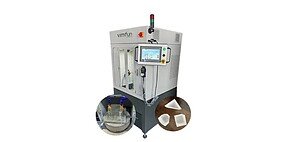
Nuestra SG20 maneja muestras de tungsteno y molibdeno de hasta 20 mm de altura. El bastidor de pórtico proporciona la rigidez necesaria para el corte de alta tensión, y la precisión de ±0.03 mm garantiza secciones transversales consistentes para el análisis metalográfico. Para tungsteno puro, recomendamos usar el SG20 con bucles de alambre de diamante electroplateado en diámetro de 0.42 mm — el recubrimiento galvanizado proporciona la exposición agresiva de diamante necesaria para metales refractarios duros.
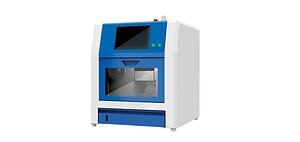
Para piezas de tungsteno o molibdeno más grandes (sección transversal de 30–60 mm), el SGSM40 proporciona una unidad de 4,5 kW y una construcción de bastidor más robusta. El mecanismo de cabezal oscilante también ayuda en cortes largos: el movimiento oscilante distribuye el desgaste del alambre de manera más uniforme, extendiendo la vida útil del alambre entre un 15 y un 20 % en comparación con la alimentación lineal únicamente.
Características clave de la máquina para el corte de metales refractarios:
- Alta capacidad de tensión del alambre — debe mantener 220 N de forma continua sin deriva. Ajuste preciso de la tensión es fundamental: el operador establece la tensión objetivo antes de cortar y la supervisa durante todo el proceso. El tungsteno puro exige una consistencia de ±5 N, por lo que se debe comprobar la tensión al menos cada 10 minutos durante cortes largos.
- Bastidor rígido con amortiguación de vibraciones — la densidad del tungsteno amplifica cualquier vibración de la máquina en la zona de corte. Incluso una oscilación del alambre de 10 μm puede iniciar microfisuras en el W puro.
- Control de la temperatura del refrigerante — para la técnica de precalentamiento de 40–50 °C en tungsteno puro, necesita un sistema de refrigeración que pueda suministrar fluido caliente. Un simple calentador en línea en la línea de refrigerante funciona.
- detección de rotura de cable — el tungsteno es lo suficientemente denso como para que un alambre roto que se agita hacia atrás transporte una energía considerable. El apagado automático evita daños en el equipo.
Limitaciones y cuándo el alambre de diamante no es la opción adecuada
Volumen de producción. El corte de tungsteno a 0,2–0,5 mm/min es inherentemente un proceso de bajo volumen. Si necesita cientos de trozos de tungsteno al día, la electroerosión es más rápida (aunque deja una capa de recubrimiento que debe ser rectificada). El alambre de diamante es mejor para I+D, secciones transversales de control de calidad y producción de lotes pequeños de hasta 20–30 piezas al día.
Secciones transversales muy grandes. Los bloques de tungsteno de más de 40 mm de ancho alargan los tiempos de corte más allá de las 2 horas. El desgaste del alambre se vuelve no lineal en cortes tan largos porque el mismo segmento de alambre pasa sobre la superficie de corte endurecida miles de veces. Para bloques de más de 50 mm, realice un corte de prueba primero para validar la economía de la vida útil del alambre.
Carburo de tungsteno (WC-Co). Esto no es lo mismo que el tungsteno puro. Los compuestos de carburo de tungsteno tienen una dureza de alrededor de HV 1200–1800, aproximadamente 3–5 veces más duros que el tungsteno puro. El WC-Co requiere especificaciones de alambre diferentes (grano más pequeño, mayor concentración de diamante) e incluso velocidades de avance más lentas. Podemos cortarlo, pero los parámetros de este artículo no se aplican directamente. Contáctenos para obtener recomendaciones específicas para WC-Co.
Tungsteno caliente. Algunos investigadores quieren cortar tungsteno por encima de la DBTT (300–400 °C) para evitar por completo el problema de la fragilidad. El alambre de diamante no funciona por encima de ~200 °C; el material de unión del alambre y los componentes poliméricos de la máquina no pueden soportar temperaturas elevadas sostenidas. Si necesita capacidad de corte en caliente, la electroerosión (EDM) o el láser son mejores opciones.
Próximos pasos prácticos
Si está trabajando con tungsteno o molibdeno y necesita secciones transversales limpias sin grietas ni daños por oxidación, envíenos 2–3 piezas de muestra para un corte de prueba. Las seccionaremos utilizando los parámetros descritos anteriormente y le devolveremos las muestras con rugosidad superficial medida, precisión dimensional y micrografías de la cara cortada.
Para laboratorios que ya ejecutan corte con alambre de diamante en otros metales, la transición a metales refractarios requiere dos ajustes clave: reduzca drásticamente su velocidad de avance (especialmente para el tungsteno) y aumente la tensión del alambre en un 20–30% en comparación con lo que usaría para titanio o acero inoxidable.
Los parámetros de corte de este artículo están validados contra ASTM B760 (especificación de placa/lámina de tungsteno) y ASTM B386 (especificación de placa/lámina de molibdeno). Los datos de integridad superficial siguen ASTM E3 las directrices de preparación de muestras metalográficas.
Explore nuestra gama completa de soluciones de sierra de hilo para metales y materiales duros →