Circular diamond wire cutting cost should be evaluated per accepted part, not by machine price or cutting time alone. A useful calculation includes wire consumption, machine time, operator time, coolant or dust control, kerf-related material loss, inspection, rework and scrap. These inputs can change substantially with material grade, workpiece size and the required surface or edge quality.
This guide provides a cost and ROI framework for continuous-loop abrasive wire processes. It does not publish a universal price, wire-life claim or savings percentage. Equipment and wire selection should follow a representative test using the actual workpiece and acceptance criteria.
Start with Cost per Accepted Part
A low cutting cost can be misleading when parts fail inspection or require extensive finishing. The more useful unit is the total process cost divided by the number of accepted parts produced in the same period.
Cost per accepted part = (wire + machine time + labor + utilities + fluid/dust control + handling + inspection + rework + scrap allocation) ÷ accepted parts
Use the same accounting boundary for the current method and the proposed process. Comparing only the new wire cost with the old blade cost, while excluding different cycle times or scrap rates, will produce an unreliable result.
| Cost item | Calculation basis | Data required |
|---|---|---|
| Wire consumption | Verified wire cost allocated across accepted cuts or cutting length | Wire price, usable life, replacement reason and accepted output |
| Machine time | Machine hourly ownership/operating rate × occupied time | Cut time, setup time, unloading time and hourly rate |
| Labor | Direct operator time × loaded labor rate | Hands-on setup, monitoring, handling and cleaning time |
| Utilities and process media | Electricity, coolant, filtration, water treatment or dust collection per batch | Measured consumption, replacement interval and disposal cost |
| Material loss | Kerf volume or mass × material value | Actual kerf, cut length/depth, density and material cost |
| Quality loss | Inspection, rework and scrap cost allocated to accepted output | Yield, defect type, rework route and rejected-part value |
| Downtime | Lost productive time × relevant hourly contribution | Wire changes, maintenance, cleaning and unplanned interruption |
Wire Life and Consumable Cost
Wire life should be measured under a defined process window. A loop removed because of coating wear, local damage, unstable tracking or a product change does not represent the same usable life. Record both the output and the reason for replacement.
A practical wire-cost metric can be based on accepted cuts, total cutting area or engaged cutting length. The correct denominator depends on the production process. When workpieces vary significantly, cutting area and material grade usually provide better context than a simple count.
- Purchase cost alone is insufficient: include shipping, preparation, installation and planned inventory where material.
- Longest life is not always lowest cost: a conservative setting may extend wire use while increasing machine time.
- Fastest feed is not always lowest cost: aggressive engagement may reduce yield or surface quality.
- Specification matters: diameter, abrasive, coating and loop geometry must match the material and debris-control method.
For available wire structures and application matching, use the diamond wire specification page. Final consumable assumptions should come from a sample test rather than a catalogue estimate.
Kerf Loss and Material Value
Kerf matters most when the raw material is expensive or when additional parts can be recovered from a fixed-size ingot, crystal or block. The actual kerf is not identical to bare wire diameter. It also reflects the abrasive envelope, runout, vibration, feed, tension and cut depth.
Material-loss cost per cut = measured kerf volume (or mass) × material value per matching unit
Do not assign the full theoretical kerf saving as financial benefit unless it changes purchased material, usable yield or recovered output. A narrower cut has economic value only when the saved material can be used or when it prevents a loss elsewhere in the process.
Cycle Time, Yield and Downstream Finishing
Cycle time should include setup, cutting, unloading, cleaning and inspection. When comparing processes, add downstream grinding or polishing required to reach the same final specification. A slower cut may still be economical if it improves accepted yield or removes a finishing step; a faster cut may be uneconomical if it creates more rework.
| Observed change | Potential economic benefit | Evidence required |
|---|---|---|
| Shorter engaged cut time | More capacity or lower occupied machine cost | Repeated cycle records with the same quality target |
| Smaller measured kerf | Higher usable material yield | Part layout showing recoverable material or additional output |
| Better edge or surface | Less finishing, rework or scrap | Inspection data and downstream process-time comparison |
| Longer verified wire life | Lower consumable and changeover cost | Accepted output per loop under controlled conditions |
| More stable operation | Less intervention and unplanned downtime | Machine log, operator time and interruption records |
| Flexible material capability | Possible equipment consolidation | Confirmed process windows for each real material, not a general claim |
Cost Boundaries Between Cutting Methods
No method is automatically cheapest. Part geometry, material, quality requirement and production volume determine which costs dominate. The table below identifies the cost questions to compare rather than declaring a universal winner.
| Process family | Cost strength to test | Possible cost penalty | Best evidence |
|---|---|---|---|
| Continuous-loop diamond wire | Controlled force, kerf and hard/brittle material capability | Wire, wheel-system, setup and application-development cost | Representative cut with measured wire use, time and yield |
| Blade or band sawing | Familiar setup and potentially high removal rate on suitable parts | Blade kerf, edge damage, deflection or finishing requirement | Accepted yield and total time to final specification |
| Spool or reciprocating wire | Different wire inventory and long-cut configurations | Reversal, wire management, floor space or maintenance may differ | Equal-material comparison using the same cut and acceptance target |
| Abrasive water-based process | Flexible profile capability for compatible workpieces | Abrasive, water, contamination, disposal and edge-condition costs | Media consumption plus cleaning and finishing records |
| EDM or thermal process | Geometry or speed advantages on compatible materials | Material conductivity, thermal effects, electrode/media and finishing | Final-part quality and complete process-route cost |
ROI and Payback Calculation
ROI should compare the proposed system with the real current process. Include equipment, tooling, installation, training, fixtures, test material and the working capital needed to start production. Benefits may include lower unit cost, recoverable capacity, improved yield or eliminated finishing, but each benefit should be supported by measured evidence.
Simple payback period = total incremental investment ÷ verified monthly net savings
Net savings should deduct new consumables, maintenance, labor, utilities and financing effects. If additional capacity has no confirmed demand, do not value every available machine hour as immediate revenue.
Cutting Application Video
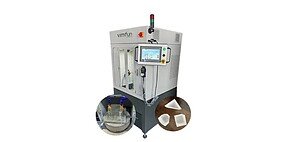
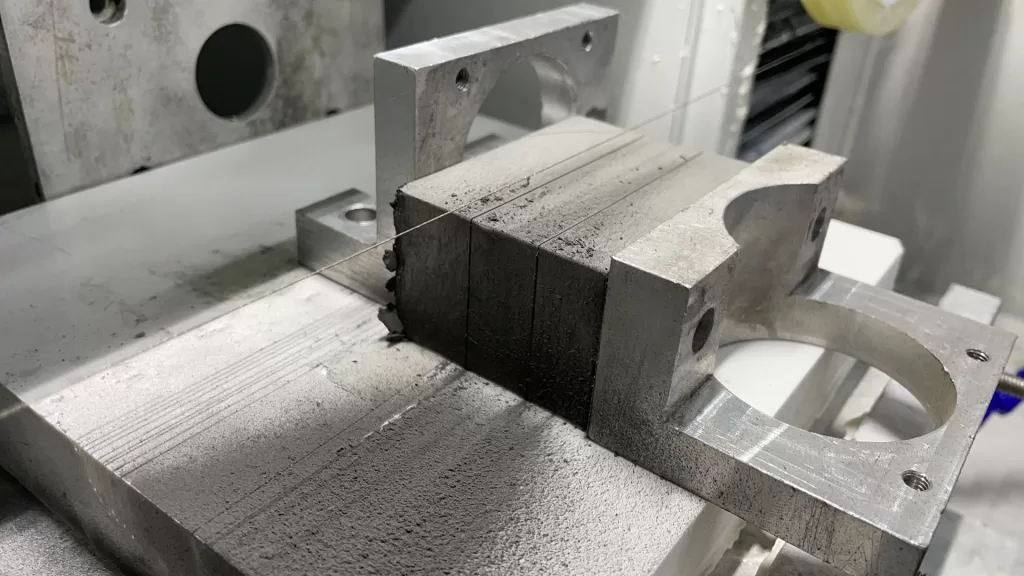
The retained video demonstrates one cutting application. It can help identify the machine and workpiece arrangement, but it does not establish cost, wire life or ROI for another material. Those values require a controlled test and production assumptions.
Data Required Before Building the Business Case
| Input group | Required information | Output supported |
|---|---|---|
| Material and part | Grade, dimensions, density/value, cut depth and annual quantity | Material-loss value and realistic workload |
| Quality target | Kerf, tolerance, edge, surface, flatness and finishing allowance | Accepted-part definition and comparable process boundary |
| Current process | Tool cost, cycle, labor, yield, rework, scrap and downtime | Verified baseline rather than an assumed competitor cost |
| Proposed test | Wire specification, settings, fixture, coolant/dust method and repetitions | Consumable, time, stability and quality evidence |
| 투자 | Machine, fixtures, installation, training, utilities and inventory | Total incremental cash requirement |
| Production value | Confirmed demand, contribution per accepted part and available shifts | Capacity value and payback scenario |
A representative sample is the safest starting point. The test-cut service page explains what to prepare before evaluating cut quality, kerf and process behavior. Once the evidence is available, the 와이어 톱 기계 가이드 can support equipment-level selection.
자주 묻는 질문
How much does circular diamond wire cutting cost per part?
There is no universal amount. Calculate wire allocation, occupied machine time, labor, utilities, material loss, inspection, rework and scrap, then divide by accepted output from the same period.
Is thinner wire always more economical?
No. A smaller abrasive envelope may reduce material loss, but stability, wire life, cutting time, quality and machine compatibility determine the total cost.
How should diamond wire life be compared?
Use accepted cuts, cutting area or engaged cutting length under a defined material and parameter window. Record why each loop was removed so normal wear is not mixed with damage or setup problems.
Does a faster cutting cycle guarantee a better ROI?
No. Faster cutting helps only when quality, yield, wire use and downstream processing remain acceptable and when the released capacity has production value.
What is the minimum evidence needed for an ROI estimate?
Use repeated sample-cut results, actual kerf and cycle measurements, accepted yield, wire consumption, finishing requirements and a complete investment estimate. A single demonstration cut is not enough.
결론
Circular diamond wire cutting can create economic value when the measured combination of consumable use, kerf, cycle time, yield and finishing improves the total production route. The decision should be based on cost per accepted part and verified monthly savings, not broad claims about productivity or maintenance. Start with the actual material, define equal acceptance criteria and build the ROI case from repeated test data.