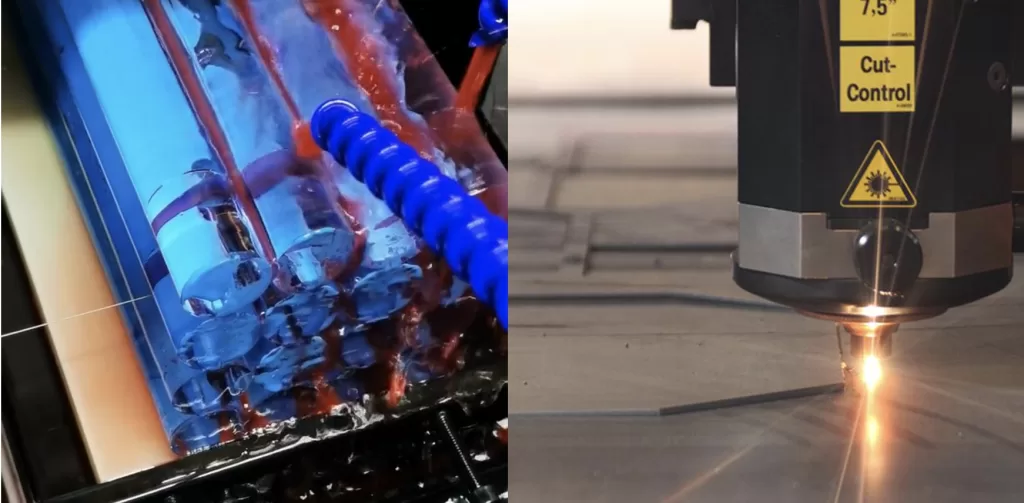
Laser cutting and diamond wire cutting can both produce controlled cuts, but they solve different manufacturing problems. A laser concentrates thermal energy into a narrow zone. A diamond wire removes material mechanically with fixed abrasive while the machine controls wire speed, tension and feed. The practical choice depends on material behavior, workpiece thickness, cut geometry, heat sensitivity, kerf allowance, surface requirements and production volume.
This guide compares the two processes for industrial material cutting. Here, 다이아몬드 와이어 means a wire carrying diamond abrasive; it does not mean that the workpiece is a gemstone or diamond. For the complete equipment range, see our 다이아몬드 와이어 톱 시스템.
How Laser Cutting Works
Laser cutting focuses a high-energy beam onto the workpiece. Depending on the material and process, the beam melts, vaporizes or chemically assists material removal while a gas jet clears the cut zone. Machine configuration, wavelength, power, focal position, assist gas and travel speed all affect the result.
- Typical strengths: fast non-contact profiling, small features, automation and repeatable 2D paths on compatible materials.
- Important constraints: heat-affected zones, reflectivity, thickness limits, fumes and material-specific absorption.
- Best evaluated with: material grade, thickness, geometry, edge requirement and allowable thermal change.
How Diamond Wire Cutting Works
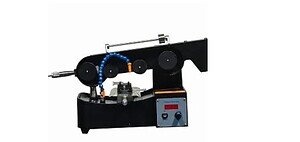
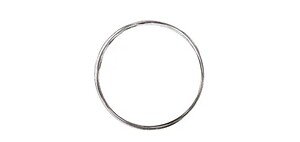
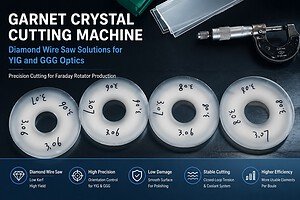
Diamond wire cutting is an abrasive sawing process. Diamond particles fixed to a moving wire create many small cutting contacts as the machine feeds the workpiece through the wire path. Because removal is mechanical rather than beam-based, the process is often evaluated for hard, brittle, heat-sensitive or thick workpieces. Read the diamond wire cutting process overview for more detail on wire motion and process control.
- Typical strengths: low thermal influence, controlled kerf, thick-section capability and support for many non-conductive materials.
- Important constraints: wire wear, tension control, guide alignment, feed stability and coolant or dust management.
- Best evaluated with: sample cuts that record edge condition, flatness, kerf, surface and processing time.
Laser Cutting vs Diamond Wire Cutting
| Selection factor | 레이저 커팅 | 다이아몬드 와이어 커팅 |
|---|---|---|
| Removal method | Focused thermal energy | Mechanical abrasion with diamond particles |
| Workpiece contact | Non-contact beam process | Wire contacts the cut zone under controlled tension and feed |
| Thermal influence | Heat-affected zone may form | Low-heat mechanical removal; coolant use depends on the material |
| Kerf and material loss | Depends on beam, focus, thickness and assist gas | Depends on wire diameter, coating, runout, tension and feed |
| Material fit | Strong on compatible sheet, metal, polymer and selected ceramic applications | Often evaluated for glass, quartz, ceramics, silicon, sapphire, graphite and composites |
| Thickness and geometry | Effective for fast profiles and fine features within process limits | Useful for thick sections, cropping, slicing and selected contour cuts |
| Primary consumables | Optics, nozzles and assist gas, depending on the system | Diamond wire plus guide, coolant or dust-control items |
| Final decision | Confirm with the real material, geometry, tolerance and sample-cut result | |
Heat, Kerf and Surface Condition
Heat-affected zone
The laser concentrates heat at the cut front. On heat-sensitive materials, this can change the edge microstructure, create recast material or introduce thermal stress. The severity depends on the material and laser settings. Diamond wire cutting avoids a concentrated thermal source, although friction and poor process control can still warm the workpiece. Calling it a low-heat process is more accurate than claiming that no heat is generated.
Kerf and material yield
Neither process has one universal kerf value. Laser kerf changes with beam quality, focus, material thickness and gas flow. Wire-saw kerf is influenced by wire diameter, abrasive envelope, vibration, alignment and feed. When the workpiece is expensive, compare the measured kerf and usable yield rather than selecting a process from a nominal specification alone.
가장자리 및 표면 요구 사항
Laser cutting can create detailed profiles rapidly, but edge oxidation, dross or recast may require secondary treatment in some applications. Diamond wire cutting can provide a controlled sawn surface on hard and brittle materials, but wire condition, workpiece support and feed stability determine chipping and surface consistency. The required downstream grinding or polishing should be included in the process comparison.
Material and Application Fit
| Application condition | Process to evaluate first | 왜 |
|---|---|---|
| Thin sheet with detailed 2D profiles | 레이저 커팅 | Non-contact motion and fast programmable paths can be effective |
| Thick quartz, glass or ceramic block | 다이아몬드 와이어 커팅 | Mechanical removal avoids a concentrated heat source and supports deep cuts |
| Reflective or difficult-to-absorb material | Process trial required | Laser wavelength and surface behavior may limit efficiency |
| Heat-sensitive optical or semiconductor material | 다이아몬드 와이어 커팅 | Low thermal influence can reduce thermal-edge risk |
| Small internal features or fine sheet contours | 레이저 커팅 | Beam access and focused energy may suit detailed geometry |
| High-value workpiece where yield matters | Compare sample cuts | Measured kerf, edge loss and secondary finishing determine total yield |
These are screening guidelines, not absolute rules. Material grade, part size, internal stress, fixture design and acceptance criteria can change the answer. For industrial hard and brittle materials, the available wire saw machine selection guide helps match machine structure to the workpiece and cut path.
Process Selection Checklist
- Define the workpiece: material grade, dimensions, shape, value and current condition.
- Define the cut: straight, profile, slice, crop or internal contour.
- Set acceptance criteria: tolerance, kerf, edge condition, flatness and surface finish.
- Confirm process restrictions: heat, water, contamination, dust, fumes and fixture access.
- Compare total process cost: cutting time, consumables, material yield and secondary finishing.
- Validate with a sample: use the actual workpiece or a representative coupon before equipment selection.
자주 묻는 질문
Is diamond wire cutting a thermal process?
No. Material is removed by abrasive contact rather than a focused heat source. Friction can still generate some heat, so wire condition, feed and cooling or dust-control strategy remain important.
Which process has the smaller kerf?
There is no universal winner. Laser kerf depends on the beam and material; wire-saw kerf depends on wire diameter, coating and machine stability. Compare measured results at the required thickness.
Can a laser cut quartz or ceramics?
Selected laser systems can process some grades and geometries, but absorption, cracking risk, thickness and edge requirements must be evaluated. Diamond wire cutting is often considered when the part is thick, brittle or sensitive to thermal damage.
Is diamond wire cutting only for diamond gemstones?
No. The term describes diamond abrasive fixed to the cutting wire. Industrial systems commonly process materials such as silicon, quartz, glass, ceramics, sapphire, graphite and composites.
How should a manufacturer choose between the two methods?
Start with material, dimensions, geometry and acceptance criteria. Then compare heat influence, measured kerf, edge condition, cutting time, consumables and secondary finishing through a representative sample cut.
결론
Laser cutting is a strong option for fast, programmable, non-contact profiling on compatible materials. Diamond wire cutting is often better suited to thick, hard, brittle or heat-sensitive workpieces where low thermal influence and controlled abrasive removal matter. The correct choice is not determined by the process name; it comes from the actual workpiece, required cut and verified output.
Discuss Your Cutting Application
Send the material, workpiece dimensions, cut path and required result. We can review whether a diamond wire process should be included in your comparison.