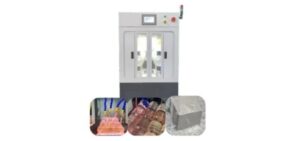
Introduction: The “Liquid Component” of the Machine
In the equation of precision slicing, the Diamond Wire Saw Coolant is not merely an accessory; it is a structural component of the cutting process.
When a diamond wire travels at 40-60 m/s, it generates intense frictional heat. Without the proper Diamond Wire Saw Coolant, materials like Optical Glass (K9/BK7) oder Germanium will suffer from heat damage. This creates Untergrundschäden (SSD) and micro-cracks that exponentially increase polishing time.
This guide explains why selecting a high-quality Diamond Wire Saw Coolant is essential for breaking the “Aerodynamic Barrier” and achieving optical precision.
1. The Three Physics Functions of Coolant
We don’t just “wet” the part. The fluid must perform three distinct engineering tasks.
1.1 Heat Dissipation (Thermal Capacity)
- Das Problem: Diamond graphitizes at ~700°C.
- The Solution: Using a water-based Diamond Wire Saw Coolant provides the high specific heat capacity needed to absorb this energy instantly.
- Optical Context: Für Germanium, temperature stability is critical to prevent thermal shock.
1.2 Chip Evacuation (Transport)
- Das Problem: Optical glass produces fine white powder.
- The Solution: The coolant must have low viscosity to penetrate the cut and flush debris away.
1.3 Lubrication (Tribology)
- Das Problem: Friction.
- The Solution: Surfactants in the coolant reduce surface tension, allowing it to wet the diamond surface better.
2. Selection: Water-Based vs. Oil-Based
2.1 Water-Soluble Synthetic Fluids (The Optical Standard)
For 95% of precision slicing, we recommend a Water-Based Synthetic Coolant.
- Composition: 95% Water + 5% Concentrate.
- Vorteile: Removes heat faster than oil; easy to clean off glass parts.
- Empfehlung: Für Ohara oder Corning glass, use a neutral pH fluid to prevent “Blue Stain.”
2.2 Oil-Based Fluids (The Outlier)
- Nachteile: High viscosity creates wire bowing and fire hazards. Avoid for optical glass.
3. The “Aerodynamic Barrier” Problem
3.1 The Physics
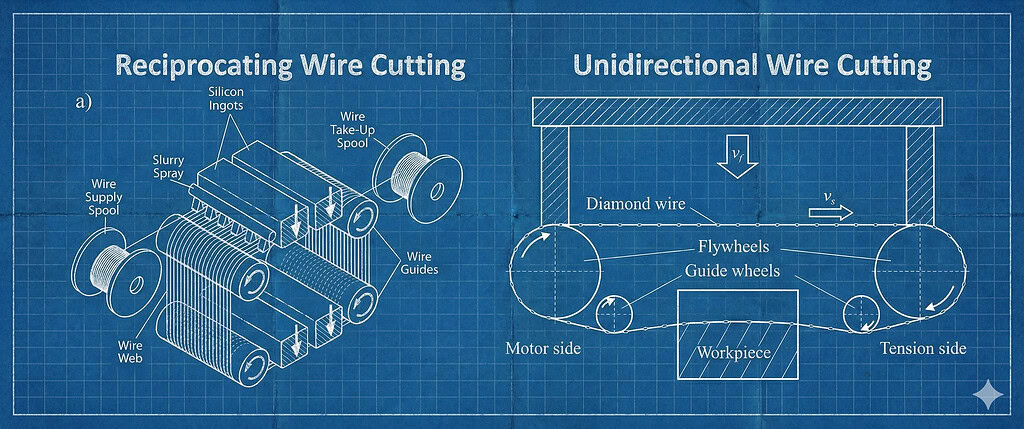
A wire moving at 60 m/s drags a layer of air with it. If you simply pour Diamond Wire Saw Coolant on the wire, the air shield deflects the liquid.
3.2 The Solution: High-Velocity Jets
- Pressure: You need High-Pressure Jets (3–5 Bar).
- Position: The nozzle must aim against the wire direction to break the air barrier.
4. Coolant Management SOP
4.1 Concentration Control
- Tool: Handheld Refractometer.
- Target: Typischerweise 3% to 5%. Low concentration leads to rust; high concentration leads to foam.
4.2 pH Monitoring
- Target: pH 8.5 – 9.2.
- Optical Warning: Ensure pH levels do not etch sensitive glass types.
4.3 Filtration
- Rule: If the fluid looks “milky” and gritty, it is recycling abrasives. Use a paper filter or centrifuge.
Abschluss
Diamond Wire Saw Coolant is a precision engineering tool. For optical fabrication, the correct strategy—Synthetic Water-Based, High-Pressure Delivery, and Strict Concentration Control—is the difference between a pristine surface and a scrap bin.
6. FAQ
Q1: Can I just use tap water instead of specialized Diamond Wire Saw Coolant? No. Tap water contains minerals that cause clogging and chlorine that causes rust. Always use RO water mixed with concentrate.
Q2: Why is my coolant foaming? Foam is caused by high concentration, soft water, or air leaks. It insulates the wire instead of cooling it.
Q3: How often should I change the coolant? For optical glass, usually every 1–3 months, or when pH drops below 8.0.