Technischer Kontext: Die Herausforderung “Hohe Produktvielfalt, geringe Produktionsmengen”
In der Halbleiter- und Materialwissenschaftsindustrie werden die Fertigungsabläufe im Allgemeinen in zwei unterschiedliche Kategorien unterteilt: Massenproduktion (Wafering) und Prozessentwicklung (Zuschneiden/Probenentnahme).
Obwohl Mehrdrahtsägen (MWS) der unbestrittene Standard für das Wafer-Schneiden mit hohem Durchsatz sind, weisen sie eine inhärente Starrheit auf. Ihre “Fixed-Pitch”-Architektur und die massiven Drahtmanagementsysteme (oft mit über 10 km Draht) verursachen erhebliche Einrichtungszeiten. Für Umgebungen, die durch Hoher Mischungsanteil, geringes Volumen (HMLV) Aufgaben – wie das Zuschneiden von Barren, die Fehleranalyse und die schnelle Prototypenerstellung –Einzeldrahtschneiden Die Architektur bietet die notwendige mechanische Vielseitigkeit.
Dieser Artikel bietet eine umfassende technische Analyse von Ein-Schleifen-Systemen und stellt deren Kinematik und Einsatzbereich den traditionellen Mehrdraht-Netzen gegenüber.

1. Kinematik: Kontinuierliche Bewegung mit hoher Geschwindigkeit
Das grundlegende Unterscheidungsmerkmal des Vimfun-Eindrahtsystems ist sein kinematisches Profil. Im Gegensatz zu Hubkolbensystemen, die beschleunigen und abbremsen müssen, nutzt unser System ein Endlosschleife Topologie.
- Konstanter Schnittvektor: Der Draht bewegt sich mit konstanter Geschwindigkeit in eine Richtung (bis zu 60 m/sDadurch wird der bei Säbelsägen auftretende Trägheitsstoß beim Anhalten und Anlaufen vermieden.
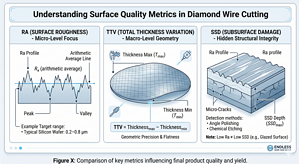
- Kraftreduzierung: Gemäß den physikalischen Grundprinzipien der Schneidleistung (Leistung = Kraft x Geschwindigkeit) ermöglicht eine Erhöhung der linearen Geschwindigkeit eine signifikante Reduzierung von Schnittkraft bei gleichbleibender Abtragsrate. Eine geringere Schnittkraft reduziert den Materialverbrauch deutlich. Untergrundschäden (SSD) und die Tiefe von Mikrorissen bei spröden Werkstoffen wie Siliziumkarbid (SiC) und Galliumnitrid (GaN).
- Oberflächenmorphologie: Durch das Fehlen von Drahtumkehrpunkten werden “Haltemarken” (periodische Kratzer, die durch das Anhalten des Drahtes entstehen) vermieden. Dies führt zu einer Oberflächenrauheit im Schnittzustand, die oft erreicht Ra < 0,6µm, wodurch der Bedarf an nachfolgenden Läppprozessen minimiert wird.
2. Geometrische Freiheit: Bearbeitung großer Durchmesser
Mehrdrahtsysteme sind geometrisch durch die Länge ihrer Führungsrollen und die Breite ihres Drahtgewebes eingeschränkt. Sie können daher keine übergroßen Werkstücke bearbeiten.
Einzeldrahtschneiden nutzt eine Portal- oder “Open Throat”-Architektur, die die Werkstückgröße vom Drahtmanagementsystem entkoppelt.
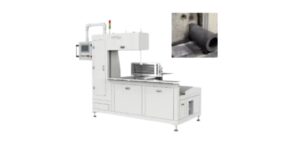
- Rachenreinigung: Standard-Portalmodelle bieten einen Z-Achsen-Verfahrweg und einen Ausladungsbereich, der die Aufnahme von Barren mit einem Durchmesser von über … ermöglicht. 400 mm (16 Zoll) im Durchmesser.
- Barrenzuschnitt (Ober-/Unterseite): Dadurch sind Eindrahtsägen in der Industrie Standard für das erste Zuschneiden von Rohkristallen. Die Möglichkeit, einen einzigen, perfekt ebenen Schnitt senkrecht zur Wachstumsachse durchzuführen, ist entscheidend für die Festlegung der Bezugsebene für die Weiterverarbeitung.
- Komplexe Sektionierung: Der Einzeldraht-Kontaktpunkt ermöglicht das Trennen unregelmäßiger industrieller Bauteile – wie etwa Keramikfilter, geologische Kernproben oder Reifen für die zerstörungsfreie Prüfung (ZfP) – ohne Störungen durch benachbarte Drähte.
3. Operative Agilität: Minimierung der Zeit bis zum ersten Schnitt“
Für Forschungs- und Entwicklungslabore sowie Pilotanlagen ist die entscheidende Effizienzkennzahl nicht die Anzahl der Wafer pro Stunde, sondern TTF (Zeit bis zum ersten Schnitt).
- Schneller Umstieg: Das Nachspannen eines Mehrdrahtgewebes ist ein einstündiger Vorgang (4–8 Stunden). Im Gegensatz dazu verwendet die Endlosschleifenarchitektur ein vereinfachtes pneumatisches Spannsystem mit weniger als 5 Führungsrollen. Ein Bediener kann eine Diamantdrahtschleife in < 2 Minuten.
- Parameterflexibilität: Dieser schnelle Umrüstvorgang ermöglicht es Verfahrenstechnikern, frei zu experimentieren. Man kann beispielsweise einen Grobschnitt mit einem 0,35 mm galvanisierten Draht, die Schlaufe austauschen und sofort einen Präzisionsschnitt mit einem 0,15 mm Harzgebundene Drähte können auf derselben Maschine hergestellt werden. Diese Vielseitigkeit ist mit dedizierten Massenproduktionsanlagen nicht möglich.
4. Wirtschaftliche Analyse: Die Kosten der Flexibilität
Aus Sicht der Betriebskosten (OPEX) bietet das Einzeldrahtschneiden eine besondere Kostenstruktur, die für Umgebungen ohne Produktionsbetrieb vorteilhaft ist.
- Null “Drahtabfall”: Bei Mehrdrahtsystemen kann der verbleibende Draht auf der Spule oft nicht effizient wiederverwendet werden, wenn ein Draht bricht oder die Arbeit vorzeitig beendet wird. Endlosschleifen hingegen sind diskrete Einheiten; für jede Arbeit wird genau eine Schleife verwendet, wodurch kein Schleifmittel verschwendet wird.
- Reduzierung des Schnittverlustes: Im Vergleich zu herkömmlichen Bandsägen (mit einer Schnittfuge von > 1,0 mm) spart ein einzelner Diamantdraht (0,35 mm) etwa 0,65 mm Materialeinsparung pro Schnitt. Bei einer 6-Zoll-SiC-Boule kann diese Materialeinsparung über 100 Ernten dem Wert der Maschine selbst innerhalb eines Jahres entsprechen.
Abschluss
Einzeldrahtschneiden ist kein Ersatz für die Mehrdraht-Massenproduktion; es ist ihr wesentliches Gegenstück.
Es überwindet die Fertigungsengpässe, die starre Produktionslinien nicht bewältigen können: übergroße Blöcke, schnelle Materialwechsel und hochpräzise Probenahme. Durch die Nutzung von Hochgeschwindigkeitskinematik und einer offenen Portalbauweise bietet es die für die moderne Materialwissenschaft erforderliche Agilität.
Spezifikationen des Ingenieurs:
Prüfen Sie die technischen Parameter unserer Eindrahtsägen.
3. FAQ-Bereich
Frage 1: Wie hoch ist die TTV-Fähigkeit (Total Thickness Variation) Ihres Einzeldrahtsystems?
Bei einem standardmäßigen 6-Zoll-SiC-Ingot erreicht unser Hochspannungs-Endlosschleifensystem typischerweise eine TTV von < 10 µm. Die konstante unidirektionale Bewegung verhindert das “Durchbiegen”, das häufig bei oszillierenden Bandsägen auftritt.
Frage 2: Kann die Maschine auch Trockenschnitte durchführen?
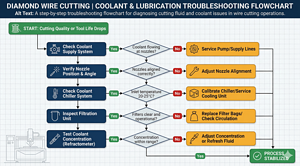
Obwohl Nassschneiden bei weichen Materialien (Graphit) möglich ist, empfehlen wir es dringend für harte Keramik und Halbleiter. Unsere Systeme sind mit Hochdruck-Kühlmitteldüsen ausgestattet, die auf den Drahteintrittspunkt gerichtet sind, um eine effiziente Späneabfuhr und Wärmeableitung zu gewährleisten.