Einleitung: Präzision, die aus strengen Standards entsteht
In Bereichen wie der Halbleiterwaferung, dem Schleifen von optischem Glas und der Präzisionskeramikbearbeitung kann ein mikroskopischer Fehler im Schneidwerkzeug zu einem katastrophalen Ausfall führen. Ein einzelner Abschnitt “abgelösten” Diamantdraht oder bereits eine Durchmesserabweichung von nur wenigen Mikrometern kann zu “Drahtspuren” auf der Werkstückoberfläche oder, schlimmer noch, zu einem Leitungsbruch bei Laufgeschwindigkeiten von 80 m/s.
Wir bei Vimfun verstehen, dass Drahtqualitätsprüfung ist nicht nur eine abschließende “Bestanden/Nicht bestanden”-Prüfung, sondern ein umfassendes Lebenszyklusmanagementsystem, das bereits vor dem Eintreffen des Rohmaterials in unserem Werk beginnt. Im Gegensatz zu herkömmlichen Herstellern, die ausschließlich auf Standard-Kohlenstoffstahl setzen, verwendet Vimfun Hochleistungsstahl. Edelstahl und Wolfram als Kerndrahtsubstrate. Die Verwendung dieser fortschrittlichen Materialien erfordert von uns die Durchführung Drahtqualitätsprüfung Protokolle, die weitaus strenger sind als der Branchendurchschnitt.
Dieser technische Leitfaden beschreibt detailliert die sechs Kernphasen unseres Qualitätskontrollprozesses und zeigt, wie wir sicherstellen, dass jede Endlosschleife eine gleichbleibende mechanische Leistung und Schnittpräzision liefert.
1. Wareneingangskontrolle (IQC): Die Grundlage von Wolfram und Stahl
Hochwertig Galvanisierung Ohne einen perfekten Untergrund ist das unmöglich. Unser Drahtqualitätsprüfung Der Prozess beginnt mit der sorgfältigen Prüfung des Rohdrahtes (Substrat). Wir wenden differenzierte Prüfstandards an, die auf der Materialart basieren: Edelstahl oder Wolfram.
Edelstahl-Kerndraht
Für die Mehrzahl der Standardanwendungen in der Industrie verwenden wir hochfesten Edelstahldraht der Güteklassen 304/316L.
- Prüfung der Korrosionsbeständigkeit: Der Hauptvorteil von Edelstahl gegenüber herkömmlichem Klavierdraht liegt in seiner Oxidationsbeständigkeit. Vor der Abnahme unterziehen wir Stichproben einem Salzsprühtest. Dadurch wird sichergestellt, dass der Kern bei längeren Produktionszyklen mit wasserbasierten Kühlmitteln nicht rostet und der sogenannte “Rost-Jacking”-Effekt, der zu Ablösungen der Beschichtung führen kann, verhindert wird.
- Duktilitäts- und Ermüdungsanalyse: Endlosdrahtschleifen müssen Millionen von Biegezyklen über Führungsrollen standhalten. Wir prüfen die Dehnungsrate des Edelstahls, um eine ausreichende Dauerfestigkeit sicherzustellen und Wasserstoffversprödung während des Beschichtungsprozesses zu verhindern.
Wolframkerndraht
Für Anwendungen mit ultrafeinen Drähten (Durchmesser < 0,15 mm), die beim hochwertigen Halbleiterschneiden eingesetzt werden, ist Wolfram das Material der Wahl.
- Zugfestigkeit (UTS): Wolfram bietet eine deutlich höhere Zugfestigkeit als Stahl. Drahtqualitätsprüfung erfordert, dass Wolframkerne eine Zugfestigkeit von 3500–4000 MPa. Dies ist entscheidend, um eine hohe Drahtspannung ohne Dehnung oder Bruch während des Schnitts aufrechtzuerhalten.
- Überprüfung der Oberflächenaktivierung: Wolfram ist aufgrund seiner passiven Oberfläche bekanntermaßen schwer galvanisierbar. Wir verwenden mikroskopische Analysen, um die Oberflächenrauheit nach der Vorbehandlung zu überprüfen und so sicherzustellen, dass die Nickelbindung eine mechanische Verankerung auf dem Wolframsubstrat gewährleistet.
2. Prozesssteuerung: Lasermessung in Echtzeit
Beim Galvanisieren bestimmt die Gleichmäßigkeit des Drahtdurchmessers die Konsistenz der Schnittfuge (Schnittbreite). Schwankt der Durchmesser, führt dies zu einer unebenen Oberfläche des Werkstücks.
- Zweiachsige Lasermikrometer: Wir verlassen uns nicht allein auf manuelle Stichproben. Unsere Produktionslinien sind mit kontinuierlichen, online arbeitenden zweiachsigen Lasermikrometern ausgestattet. Diese Geräte scannen die X- und Y-Achse des Drahtes tausendfach pro Sekunde, während dieser das Galvanisierbad verlässt.
- Toleranzstandard ±0,02 mm: Während in manchen Laborumgebungen theoretische Perfektion angestrebt wird, halten wir in der industriellen Serienfertigung die Durchmessertoleranz strikt auf ±0,02 mm ein. Dieser Standard gewährleistet die optimale Balance zwischen hoher Ausbeute und ausreichendem Spanraum. Jedes Drahtsegment, das außerhalb dieses Bereichs liegt, wird vom System automatisch zur Entfernung markiert.
- Rundheitskontrolle (Ovalitätskontrolle): Mithilfe von Echtzeit-Laserdaten überwachen wir die Ovalität des Drahtes. Ein elliptischer Querschnitt verursacht Vibrationen bei hohen Drehzahlen. Unser System zur Drahtqualitätsprüfung stellt sicher, dass der Draht konzentrisch bleibt, um ein “Hammern” der Kristalloberfläche zu verhindern.
3. Mikroskopische Oberflächenanalyse (REM): Das Unsichtbare sichtbar machen
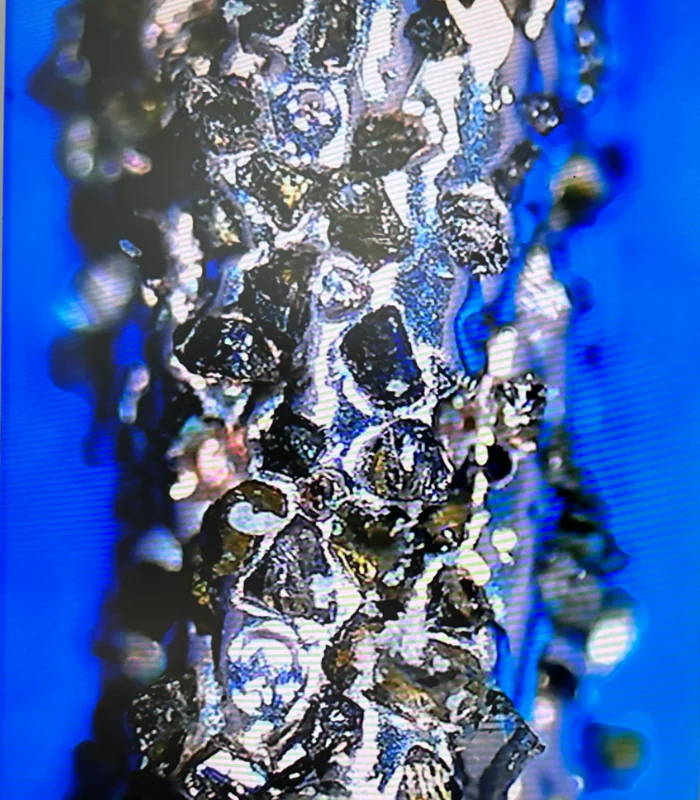
Ein Draht, der mit bloßem Auge einwandfrei aussieht, kann im Mikrometerbereich gravierende Mängel aufweisen. Wir verwenden Rasterelektronenmikroskope (REM) für detaillierte Untersuchungen. Drahtqualitätsprüfung, mit Schwerpunkt auf der Topographie des Diamantkorns.
Diamantverteilung und -agglomeration
- Gleichmäßigkeit: Unter dem Mikroskop müssen die polyedrischen Diamantpartikel gleichmäßig verteilt sein und einem “Sternenhimmel” ähneln.”
- Keine Agglomeration: Wir lehnen Produkte mit Anzeichen von Verklumpung oder Agglomeration strikt ab. Verklumpte Diamanten können Schmutz nicht effektiv entfernen; stattdessen erzeugen sie lokale Reibungspunkte, die die Werkstückoberfläche verbrennen oder thermische Risse in Glas verursachen können.
Höhe des Grit-Überstands
Die “Freilegung” des Diamanten bestimmt die Schneidleistung.
- Der Standard: Unsere Inspektionsvorgaben müssen 30% – 40% Die Höhe des Diamantpartikels muss über die Nickelbindung hinausragen.
- Zu niedrig (<20%): Der Draht verliert seine Schneidfähigkeit und erzeugt übermäßige Reibung und Hitze anstatt zu schneiden.
- Zu hoch (>50%): Die Nickelbindung ist unzureichend. Die Diamanten werden beim Auftreffen auf harte Materialien wie Saphir aus der Bindung gelöst, was zu einem schnellen Werkzeugverschleiß führt.
4. Zerstörende physikalische Prüfung: Haft- und Zugfestigkeitsgrenzen
Um die Haftfestigkeit der Beschichtung wirklich zu überprüfen, müssen wir versuchen, sie zu zerstören. Wir entnehmen jeder Produktionscharge Stichproben für zerstörende Prüfungen.
Der Wickel- und Torsionstest (Haftung)
Dies ist die effektivste Methode, um “Stripping”-Risiken aufzudecken.
- Verpackungstest: Der fertige Draht wird fest um einen Stahlzylinder gewickelt, dessen Durchmesser dem Dreifachen des Drahtdurchmessers entspricht.
- Torsionsprüfung: Alternativ wird der Draht entlang seiner Achse so lange verdreht, bis er zerstört wird.
- Bestehenskriterien: Unter starker Vergrößerung ist die Nickelbeschichtung an der Bruchstelle oder am Biegeradius zu erkennen. darf nicht reißen, abblättern oder sich ablösen vom Kern. Dies beweist, dass die Beschichtung auch dann chemisch und mechanisch mit dem Substrat verbunden bleibt, wenn der Kerndraht unter extremer Belastung bricht.
Ultimativer Bruchlasttest
Sowohl bei Wolfram- als auch bei Edelstahlprodukten verwenden wir eine Universalprüfmaschine, um Proben bis zum Bruchpunkt zu belasten.
- Datenarchivierung: Die Bruchlast (in Newton) wird für jede Spule erfasst. Anhand dieser Daten können wir Kunden hinsichtlich der maximal zulässigen Spannungseinstellungen für ihre Maschinen beraten (in der Regel empfohlen bei 50-601 TP3T der geprüften Bruchlast).
5. Rückverfolgbarkeit und Chargenverwaltung
Vimpuns Drahtqualitätsprüfung reicht über das Labor hinaus; es ist tief in unser Datenmanagement integriert.
- Einzigartige Serialisierung: Jede endlose Drahtschleife erzeugt nach ihrer Fertigstellung eine eindeutige Seriennummer (SN).
- Vollständige Rückverfolgbarkeit über den gesamten Lebenszyklus: Anhand dieses SN-Codes können wir das Produkt bis zur spezifischen Charge des Rohmaterials (Wolfram/Stahl-Herkunft), dem verwendeten Galvanisierungsbad, den Stromdichteparametern während der Herstellung und dem spezifischen QC-Inspektor, der das Produkt abgenommen hat, zurückverfolgen.
- COA-Erzeugung: Für Industriekunden bieten wir Folgendes an: Analysezertifikat (COA) Dieses Dokument listet die tatsächlich gemessenen Durchschnittsdurchmesser, Zugfestigkeitswerte und Korngrößenverteilungsdiagramme für die jeweilige Charge auf.
6. Zusammenfassung der Inspektionsstandards
Die folgende Tabelle fasst den Kern zusammen Drahtqualitätsprüfung Parameter für Vimfun-Produkte basierend auf dem Kernmaterial:
| Prüfparameter | Edelstahlkern | Wolframkern | Prüfverfahren |
| Substrateigenschaften | Korrosionsbeständig / Hohe Flexibilität | Ultrahohe Zugfestigkeit | Salzsprüh-/Zugprüfgerät |
| Durchmessertoleranz | ± 0,02 mm | ± 0,02 mm | Online-Lasermikrometer |
| Haftung der Beschichtung | Keine Risse in der Folie | Keine Delamination bei Verdrehung | Zerstörender Mikrotest |
| Diamantdichte | > 250 Partikel/mm² | > 300 Partikel/mm² | Optische Bildanalyse |
| Rundheitskontrolle | < 0,015 mm | < 0,01 mm | Laserscan-Berechnung |
Abschluss
In der Präzisionsfertigung basiert Vertrauen auf transparenten Daten und kompromisslosen Standards. Durch die Anwendung von Wolfram und Edelstahl als überlegene Substrate und Verriegelungsdurchmessertoleranzen bis ±0,02 mm, Vimfun setzt neue Industriestandards für endlose Diamantdrähte. Unser mehrstufiges System Drahtqualitätsprüfung Das System stellt sicher, dass jede Schleife, die Ihre Anlage erreicht, für einen stabilen Betrieb bei Geschwindigkeiten von 80 m/s bereit ist.
Um zu erfahren, wie Sie Ihre Maschinenparameter anhand dieser Qualitätskennzahlen anpassen oder einen bestimmten Draht für Materialien wie SiC oder Graphit auswählen können, konsultieren Sie bitte unseren Leitfaden zur Auswahl von Schleifdrähten.
3. FAQ-Bereich (FAQ-Schema)
(Am Ende des Beitrags hinzufügen)
Frage 1: Warum verwenden Sie für einige Drähte einen Wolframkern?
Wolfram besitzt einen extrem hohen Elastizitätsmodul und eine hohe Zugfestigkeit. Bei der Herstellung sehr feiner Diamantdrähte (z. B. 0,12 mm – 0,18 mm) würde herkömmlicher Stahldraht unter der erforderlichen Spannung brechen oder sich dehnen. Wolfram hingegen behält seine hervorragende Geradheit und Zugfestigkeit und eignet sich daher ideal für präzises Schneiden mit schmaler Schnittfuge.
Frage 2: Wie wirkt sich die Toleranz von ±0,02 mm auf den Schneidvorgang aus?
Dies ist ein ausgewogener Industriestandard. Eine Toleranz von ±0,02 mm gewährleistet einen vibrationsfreien, reibungslosen Drahtvorschub über die Führungsrollen und eine gleichmäßige Schnittbreite. Zu große Abweichungen würden zu Stufen oder Drahtspuren auf der Werkstückoberfläche führen.
Frage 3: Worin besteht der Unterschied zwischen Edelstahlkernen und Standardkernen aus hochkohlenstoffhaltigem Stahl?
Standardmäßig verwendeter Kohlenstoffstahl neigt bei Kontakt mit wasserbasierten Kühlmitteln zum Rosten, wodurch sich die Nickelbeschichtung von innen ablösen kann (Korrosionshemmung). Die Edelstahlkerne von Vimfun bieten eine überlegene Korrosionsbeständigkeit und verlängern die Drahtlebensdauer beim Nassschneiden deutlich.