Einleitung: Die kinematische Kette hinter dem Präzisionsschneiden
Die Diamantseilsägenstruktur ist die Grundlage, die Schnittstabilität, Genauigkeit und Langzeitpräzision in modernen Endlosdrahtsägesystemen bestimmt.
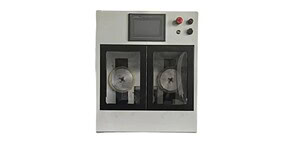
Eine Diamantdrahtsäge ist ein Präzisionsschneidsystem, dessen Leistungsfähigkeit nicht nur vom Diamantdraht selbst abhängt, sondern auch von der internen mechanischen Struktur, die Bewegung, Steifigkeit und geometrische Stabilität bestimmt.
Bei modernen Endlos-Diamantdrahtsägemaschinen wird die Schnittqualität durch messbare Parameter wie die Gesamtdickenabweichung (TTV), die Oberflächenrauheit (Ra) und die Untergrundschädigung (SSD) definiert, die durch geeignete Maßnahmen kontrolliert werden. Schneideprozessausführung.
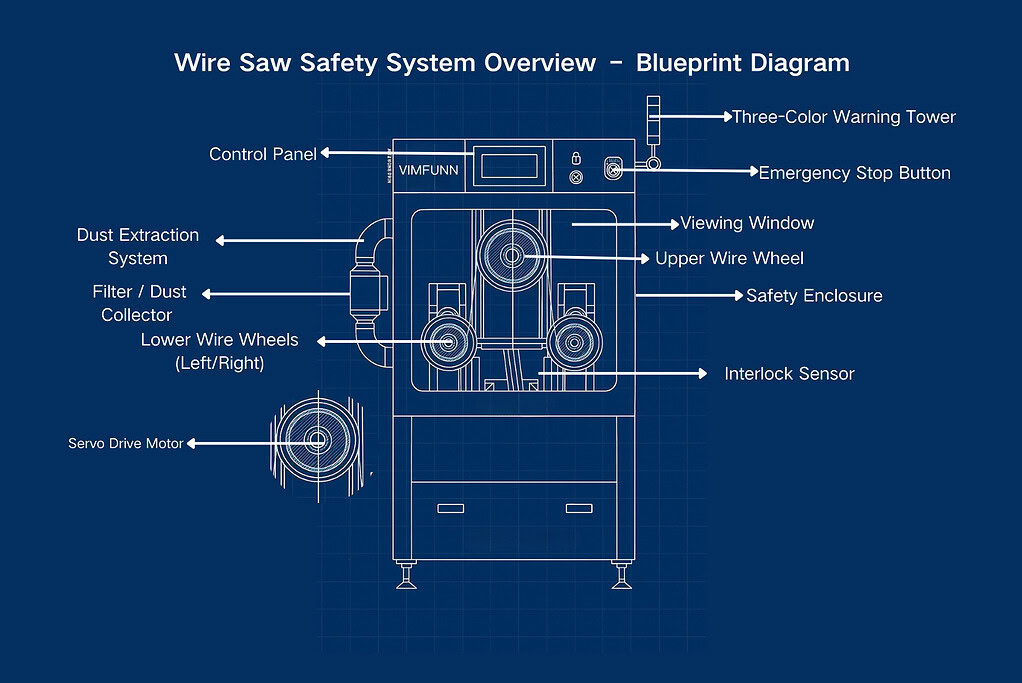
Aus ingenieurtechnischer Sicht ist ein Diamant Seilsäge ist ein geschlossenes kinematisches System. Die Fähigkeit, beim Hochgeschwindigkeitsschneiden eine Genauigkeit im Mikrometerbereich aufrechtzuerhalten, beruht auf dem koordinierten Zusammenspiel dreier Kernsubsysteme: dem Antriebssystemdie Spannungssystem, und die Führungsradsystem. Dieser Artikel analysiert die interne Struktur von Diamantdrahtsägemaschinen, indem er untersucht, wie diese Teilsysteme zusammenarbeiten, um Geschwindigkeit, Steifigkeit und geometrische Ausrichtung zu steuern.
1. Das Antriebssystem: Drehmomentstabilität und Geschwindigkeitsregelung
Das Antriebssystem beschleunigt den Diamantdraht auf die Betriebsgeschwindigkeit – typischerweise 30–60 m/s – und hält diese konstant, während der Draht auf einen sich ständig ändernden Schnittwiderstand trifft. Selbst geringe Schwankungen der Drahtgeschwindigkeit können direkt zu Oberflächenwelligkeit oder Dickenabweichungen an der Schnittfläche führen, insbesondere wenn die Vorschubbewegung nicht korrekt geregelt wird. Zuführsystem und Steuerungslogik.
1.1 Direktantrieb versus Riemenantrieb
Herkömmliche Drahtsägen nutzten häufig Riemenantriebe. Diese Bauweise ist zwar mechanisch einfach, führt aber zu elastischen Elementen in der Antriebskette. Unter hohen oder schwankenden Schnittbelastungen – wie beispielsweise beim Schneiden von Siliziumkarbid- (SiC) oder Saphirblöcken mit großem Durchmesser – können Riemenelastizität und Mikroschlupf kurzzeitige Drehzahlschwankungen verursachen. Diese Schwankungen äußern sich häufig in Form von periodischen Rattermarken auf der Schnittfläche.
Moderne Diamantseilsägemaschinen übernehmen zunehmend Direktantriebsarchitekturen (DD), Hierbei ist das Hauptantriebsrad direkt auf dem Rotor eines drehmomentstarken Servomotors montiert. Durch den Verzicht auf Riemen und Kupplungen werden mechanisches Spiel eliminiert und Vibrationsquellen deutlich reduziert. Dank hochauflösender Encoder und geschlossener Servoregelung können Direktantriebssysteme die Drahtgeschwindigkeit selbst bei lokalen Härteschwankungen im Material innerhalb enger Toleranzbereiche halten.
1.2 Schwungradträgheit und Störungsdämpfung
Bei einer Endlosdrahtkonfiguration dient das Hauptantriebsrad gleichzeitig als Schwungrad. Sein Trägheitsmoment spielt eine entscheidende Rolle bei der Stabilisierung der Drahtbewegung. Mechanisch betrachtet wirkt ein höheres Trägheitsmoment schnellen Änderungen der Winkelgeschwindigkeit entgegen und fungiert als mechanischer Tiefpassfilter, der hochfrequente Drehmomentstörungen glättet, die beim abrasiven Schneiden entstehen.
Die Massenträgheit muss jedoch sorgfältig optimiert werden. Eine zu hohe Schwungmasse verbessert zwar die Drehzahlstabilität, verlängert aber den Bremsweg in Notsituationen wie beispielsweise einem Drahtbruch. Ein gut ausgelegtes Antriebssystem sorgt für ein ausgewogenes Verhältnis zwischen Massenträgheit und Bremsleistung, um sowohl die Betriebsstabilität als auch die Maschinensicherheit zu gewährleisten.
2. Das Spannsystem: Steifigkeitsregelung und dynamisches Verhalten
Die Spannung ist der Parameter, der einem flexiblen Diamantdraht seine effektive Balkensteifigkeit verleiht. Ohne kontrollierte Spannung verhält sich der Draht wie eine nachgiebige Schnur, die sich unter Schnittkräften durchbiegt und kegelförmige oder gekrümmte Schnitte erzeugt, insbesondere wenn Schnittparameter Beispielsweise sind Vorschubgeschwindigkeit und Drahtvorschubgeschwindigkeit nicht richtig aufeinander abgestimmt.
2.1 Pneumatische Vorspannung und Verhalten mit geringer Hysterese
Frühe Drahtsägenkonstruktionen verwendeten oft Gegengewichte oder mechanische Federn. Diese Methoden sind zwar einfach, weisen aber Hysterese und eine variable Kraftabgabe auf. Mechanische Federn folgen dem Hookeschen Gesetz (F = kx), d. h. die aufgebrachte Kraft ändert sich mit der Dehnung der Feder. Durch die Dehnung des Drahtes beim Schneiden schwankt die Spannung, was die Stabilität des Prozesses beeinträchtigt.
Moderne Diamantseilsägemaschinen verwenden typischerweise pneumatische Spannsysteme. Ein reibungsarmer Luftzylinder übt mithilfe von Druckluft als nahezu konstantem Kraftmedium Kraft auf eine schwimmende Riemenscheibe aus. Da sich Luft wie eine praktisch unendlich große Feder mit minimaler Hysterese verhält, gewährleisten pneumatische Systeme eine stabile Spannung unabhängig von kleinen Positionsänderungen und halten den Draht während des gesamten Schneidevorgangs gleichmäßig straff.
2.2 Reaktion auf Stoßbelastungen
Beim ersten Kontakt des Drahtes mit dem Werkstück – insbesondere an scharfen Kanten oder flachen Oberflächen – ändert sich der Kontaktzustand abrupt, wodurch eine kurzzeitige Stoßbelastung entsteht. Ein träges Spannsystem lässt diese Spannungsspitzen sich im Draht ausbreiten, was das Risiko eines Drahtbruchs erhöht oder sichtbare Eintrittsspuren auf der Schnittfläche verursacht.
Pneumatische Spannvorrichtungen reagieren innerhalb von Millisekunden auf diese Stoßbelastungen, absorbieren die Energie und halten die voreingestellte Spannung aufrecht. Moderne Steuerungssysteme überwachen die Spannung in Echtzeit, um die Wärmeausdehnung des Drahtes auszugleichen und so stabile mechanische Bedingungen vom Ein- bis zum Austritt zu gewährleisten.
3. Das Führungsradsystem: Definition der Schnittbahn
Wenn das Antriebssystem die Bewegung und das Spannsystem die Steifigkeit bereitstellt, definiert das Führungsrollensystem den geometrischen Schnittpfad. Die Positionsgenauigkeit des Schnitts darf die mechanische Genauigkeit der Führungsrollen, die den Draht führen, nicht überschreiten.
3.1 Radialer Rundlauf und Oberflächenwelligkeit
Jedes Führungsrad dient als rotierende Bezugsfläche. Jeglicher Rundlauffehler des Rades führt direkt zu einer periodischen Auslenkung des Drahtes. Bei hohen Drahtgeschwindigkeiten können selbst Rundlauffehler im Mikrometerbereich – größer als 10 μm – Schwingungsfrequenzen erzeugen, die der Schnittfläche Wellenbildung verleihen.
Bei der Bearbeitung von Halbleiter- und optischen Materialien muss der Rundlauf der Führungsrolle streng kontrolliert werden, oft unter 5 μm. Präzisionsmaschinen erreichen dies durch Schleifen der Rollenbaugruppe nach dem Einbau der Lager, wodurch die Rotationsgenauigkeit unter der tatsächlichen Betriebslast sichergestellt wird.
3.2 Keramische Hybridlager und Dichtungen
Die Führungsrollen arbeiten mit hohen Drehzahlen und sind ständig Kühlmittel und Schleifmittelsuspension ausgesetzt. Standard-Stahllager verschleißen unter diesen Bedingungen schnell. Hochwertige Diamantseilsägemaschinen verwenden daher... Keramische Hybridlager, wobei keramische Wälzkörper (Si₃N₄) mit Stahllaufbahnen kombiniert werden.
Keramische Wälzkörper reduzieren die Zentrifugalkräfte bei hohen Drehzahlen und bieten elektrische Isolation, wodurch innere Lagererosion verhindert wird. Ebenso wichtig ist die Abdichtung. Labyrinthdichtungen erzeugen einen komplexen Pfad, der verhindert, dass abrasive Wälzkörper die Lagerlaufbahnen erreichen. Dies verlängert die Lebensdauer erheblich und erhält die Rotationsgenauigkeit.
3.3 Nutgeometrie und Drahtdrift
Die V-förmige Nut an der Unterseite jeder Führungsrolle richtet den Draht aus und stabilisiert ihn. Eine korrekt geformte Nut gewährleistet seitliche Führung und Positionsstabilität. Mit der Zeit kann abrasiver Verschleiß diese V-Form in ein flacheres U-Profil umwandeln. Geht die seitliche Führung verloren, kann der Draht seitlich abdriften und keilförmige Schnitte verursachen. Die regelmäßige Überprüfung der Nutgeometrie ist daher eine wichtige Wartungsmaßnahme bei Präzisionsschneidprozessen und wird üblicherweise im Rahmen der routinemäßigen Wartung durchgeführt. Wartung von Diamantdrahtsägen.
4. Strukturelle Steifigkeit: Schließen des Kraftkreislaufs
Alle mechanischen Teilsysteme müssen auf einer starren Maschinenstruktur montiert sein, um den Kraftkreislauf zu schließen. Strukturelle Nachgiebigkeit verstärkt Vibrationen und verschlechtert die Positionsgenauigkeit, unabhängig von der Präzision der einzelnen Komponenten.
Hochpräzise Diamantdrahtsägemaschinen verwenden häufig Sockel aus natürlichem Granit Granit bietet im Vergleich zu geschweißten Stahlrahmen eine überlegene innere Dämpfung, indem er hochfrequente Schwingungen absorbiert, anstatt sie in den Schneidbereich weiterzuleiten. Sein niedriger Wärmeausdehnungskoeffizient gewährleistet zudem die geometrische Stabilität in Forschungslaboren, in denen die Umgebungstemperatur schwanken kann.
Abschluss
das Verständnis des Diamantseilsägenstruktur Dies ist unerlässlich, um zu erklären, warum mechanische Stabilität, Spannungsregelung und Führungsgenauigkeit entscheidend für präzise Schnittergebnisse sind. Das Antriebssystem gewährleistet eine gleichmäßige Schnittgeschwindigkeit, das Spannungssystem sorgt für konstante Steifigkeit und das Führungsradsystem definiert den präzisen Schnittpfad.
Zusammen bilden diese Teilsysteme eine geschlossene kinematische Kette, die auch bei Hochgeschwindigkeitsschnitten eine Genauigkeit im Mikrometerbereich gewährleistet. Präzisionsschnitte werden nicht allein durch den Diamantdraht erreicht, sondern durch die mechanische Integrität des gesamten Systems, das seine Bewegung steuert.
Erfahren Sie mehr über unsere Diamantseilsägesysteme und deren Arbeitsprinzipien.
FAQ
Frage 1: Warum wird pneumatische Spannung der Federspannung vorgezogen?
Die pneumatische Vorspannung gewährleistet eine nahezu konstante Kraft unabhängig von der Drahtdehnung, während sich die Kraft mechanischer Federn mit zunehmender Dehnung ändert. Pneumatische Systeme bieten zudem eine geringere Hysterese, was zu einer schnelleren Reaktion auf Stoßbelastungen und einem reduzierten Drahtbruchrisiko führt.
Frage 2: Wie beeinflusst der Verschleiß der Führungsrolle die Schnittgenauigkeit?
Abgenutzte Führungsrollenrillen verringern die Seitenstabilität des Drahtes, was zu Abweichungen, Wellenbildung und keilförmigen Schnitten führt. Übermäßiger Rundlauffehler verursacht zudem periodische Vibrationsspuren auf der Schnittfläche.
Frage 3: Welche Rolle spielt die Maschinenbasis?
Eine starre Unterlage mit hohen Dämpfungseigenschaften – wie beispielsweise Granit – absorbiert Maschinenschwingungen und gewährleistet geometrische Stabilität. Dadurch wird die Schwingungsübertragung auf das Werkstück minimiert und die Oberflächenrauheit (Ra) sowie die TTV (Total Vibration Value) direkt verbessert.