소개
미세 연마 와이어 절삭에서 연마층의 특성은 절삭 정밀도, 절삭 폭 안정성, 표면 무결성 및 표면 아래 손상에 큰 영향을 미칩니다. 연마 와이어 성능에 영향을 미치는 모든 매개변수 중에서, 다이아몬드 입자 크기 이는 가장 중요한 요소 중 하나입니다.
사파이어, 탄화규소(SiC), 석영, 고급 세라믹, 흑연과 같은 취성이 강하고 고가의 소재를 가공할 때 연마재 입자 크기는 취성 파괴 및 미세 절삭 메커니즘을 좌우합니다. 이 글에서는 엔지니어링 수준에서 연마재 입자 크기가 취성 파괴 및 미세 절삭 메커니즘에 미치는 영향을 설명합니다. 다이아몬드 입자 크기 절단 정확도에 영향을 미치고, 공정 변수와 상호 작용하는 방식, 그리고 엔지니어가 정밀 슬라이싱 용도에 적합한 입자 크기를 선택하는 방식에 영향을 미칩니다.
연마재 입자 크기가 절삭 정확도에 미치는 영향
연마 와이어 절삭에서 재료 제거는 미세 절삭과 제어된 취성 파괴에 의해 좌우됩니다. 각 다이아몬드 연마 입자의 크기는 침투 깊이, 응력 분포 및 재료 표면과의 국부적인 상호 작용을 결정합니다.
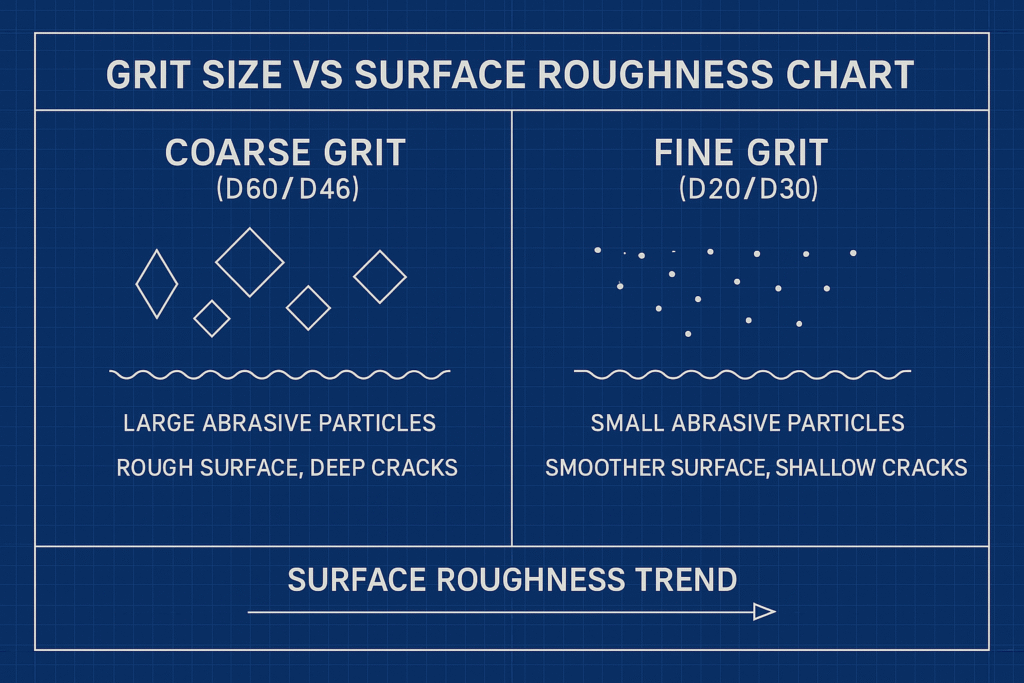
1. 거친 다이아몬드 입자 크기
거친 입자는 더 큰 돌출 높이와 더 강력한 재료 제거 효과를 제공합니다.
형질:
- 높은 제거율
- 더 큰 절단 폭 변화
- 깨지기 쉬운 조각이 부서질 위험 증가
- 더 깊은 지하 손상
- 더 거친 표면 질감
- 더 높은 전선 장력이 필요합니다
- 흑연, 고밀도 세라믹 및 두꺼운 SiC 슬라이스에 적합합니다.
표면 정밀도보다 처리량을 우선시할 때는 거친 입자가 적합합니다.
2. 미세 다이아몬드 입자 크기
미세한 연마 입자는 절삭력을 여러 접촉점에 분산시킵니다.
장점:
- 침투 깊이 감소
- 미세 진동 감소
- 더 좁고 안정적인 절단면
- 우수한 표면 마감
- 최소한의 지하 손상
- 취성 기판에 사용되는 미세 연마 와이어 시스템에 이상적입니다.
미세한 입자는 사파이어 광학 부품, 얇은 필터, 반도체 웨이퍼 및 정밀 유리 부품에 필수적입니다.
다양한 재료에 맞는 입자 크기 선택
| 재료 | 권장 사포 입자 크기 | 기술적 이유 |
|---|---|---|
| 사파이어 | 미세-중간 | 결정면의 이방성 깨짐을 최소화합니다. |
| SiC 웨이퍼 | 중간-거친 | 높은 경도를 위해서는 더 강한 연마재 침투력이 필요합니다. |
| 광학 유리/석영 | 괜찮은 | 균열 발생 및 측면 파괴를 감소시킵니다. |
| 고급 세라믹 | 중간 | 효율성과 표면 품질의 균형을 유지합니다. |
| 석묵 | 조잡한 | 다공성 구조는 강력한 제거 작업에도 견딜 수 있습니다. |
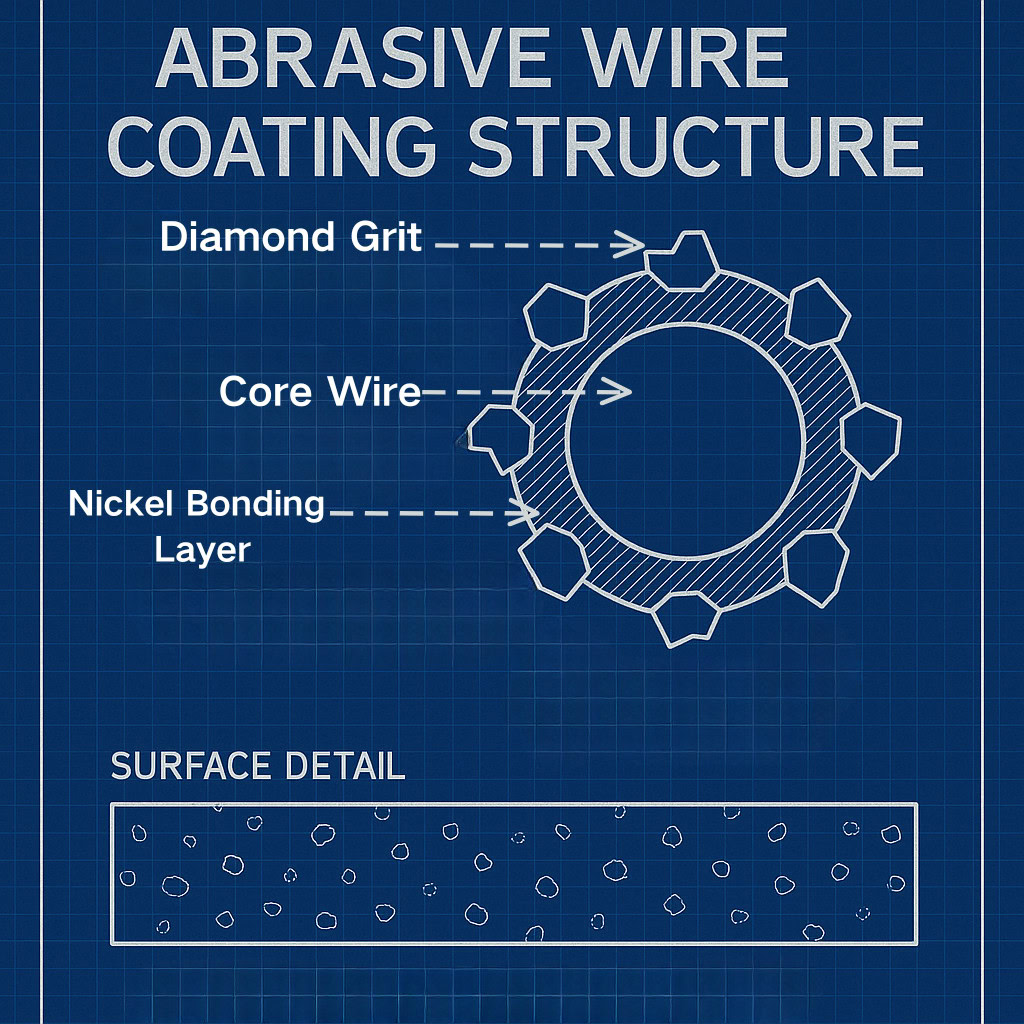
연마 코팅 구조 및 접착 특성에 대한 자세한 내용은 연마 코팅 재료 관련 기술 페이지를 참조하십시오. 실제 적용 분야에서는 일반적으로 재료 특성과 함께 입자 크기 선택을 고려합니다. 전선 선택 기준 공정 계획 단계에서.
다이아몬드 입자 크기가 절삭 정밀도를 좌우하는 방식
세 가지 핵심 엔지니어링 매개변수는 다음의 직접적인 영향을 받습니다. 다이아몬드 입자 크기:
1. 절단 폭 안정성
- 거친 입자 → 더 넓은 절단 폭, 더 큰 편차
- 미세한 입자 → 좁고 반복 가능한 절단면 형상
반도체 슬라이싱에서 균일한 웨이퍼 두께를 얻으려면 안정적인 절단 폭이 필수적입니다.
2. 표면 거칠기
표면 형상은 연마재 돌출 높이와 상관관계가 있습니다.
- 거친 입자 → 더 깊은 긁힘 자국
- 미세한 입자 → 더욱 매끄러운 질감 및 연마 부하 감소
광학 및 전자 부품은 세밀한 구성에 크게 의존합니다.
3. 지하 손상 깊이
연마재 크기가 커질수록 응력장 강도가 증가합니다.
- 거친 입자 → 미세 균열의 더 깊은 전파
- 미세한 입자 → 내부 손상 최소화
이는 특히 SiC, 사파이어, 광학 기판 및 세라믹에 중요합니다.
입자 크기와 절삭 매개변수 간의 상호 작용
다이아몬드 입자 크기는 와이어 속도, 와이어 장력 및 이송 속도와 밀접한 관련이 있습니다.
와이어 속도
- 거친 입자는 고속에서 최상의 성능을 발휘합니다.
- 미세한 입자는 열과 진동을 최소화하기 위해 적당한 속도로 작업하는 것이 좋습니다.
와이어 장력
- 높은 장력은 거친 입자 절삭을 안정화합니다.
- 미세한 입자를 가공하려면 응력 집중을 방지하기 위해 장력을 제어해야 합니다.
공급 속도
- 굵은 입자 → 더 빠른 이송 속도 허용
- 고운 입자 → 깔끔한 슬라이싱을 위해서는 느리고 안정적인 이송 속도가 필요합니다.
어떤 연마재 크기에서도 높은 정밀도를 얻으려면 균형 잡힌 매개변수 조정이 필수적입니다. 산업 환경에서는 연마재 크기 선택이 항상 체계적인 검증 과정을 통해 이루어집니다. 전선 품질 검사 및 공정 제어.
비교: 다이아몬드 와이어 절단 vs. 기존 절단 방식
다이아몬드 입자 크기 제어의 장점을 이해하려면 다이아몬드 와이어 절단과 기존의 기계적 및 열적 절단 공정을 비교하는 것이 유용합니다. 이러한 기존 공정들은 다음과 같은 한계를 가지고 있습니다. ~ 아니다 연마재 입자 크기를 제어 변수로 활용합니다.
| 기능 | 다이아몬드 와이어 절단(연마 미세 절단) | 레이저 절단(열) / 톱날 절단(기계식) |
|---|---|---|
| 재료 제거 메커니즘 | 미세 절삭 + 제어된 취성 파괴 | 레이저: 용융/기화; 블레이드: 마찰 + 전단 |
| 열 충격 | 최소 | 중요한 (레이저) |
| 미세 균열 위험 | 미세한 다이아몬드 입자로 낮게 연마 | 열 충격이나 공구 진동으로 인해 높은 온도가 발생할 수 있습니다. |
| 커프 폭 | 좁고 균일한 | 레이저는 절단 폭을 넓히고, 칼날은 본래 절단 폭 두께를 가지고 있습니다. |
| 표면 품질 | 입자 크기 조절 가능; 뛰어난 마감 | 레이저: 재주조층; 블레이드: 더 거친 표면 |
| 취성 재료에 대한 적합성 | 훌륭한 | 레이저는 투명 재료에 적합하지 않으며, 블레이드는 초경질 세라믹에 적합하지 않습니다. |
다이아몬드 와이어 절단은 제어 가능한 연마 메커니즘을 제공하여 열 절단이나 기계식 톱질로는 달성할 수 없는 수준의 정밀도를 가능하게 합니다.
사포 입자 크기 선택의 적용 사례
사파이어 웨이퍼 절단
미세한 입자는 r면과 c면 표면을 따라 발생하는 칩핑 현상을 크게 줄여주며, 표면 거칠기를 최대 40%까지 개선합니다.
석영 광학
미세한 입자는 측면 균열 전파를 제한하고 투과 균일성을 향상시킵니다.
흑연 블록
입자가 굵으면 치수 정확도에 큰 영향을 미치지 않으면서 효율성이 향상됩니다.
SiC 반도체 웨이퍼
중간에서 굵은 입자는 제거 속도와 표면 무결성 사이의 균형을 유지합니다.
결론
다이아몬드 그릿 크기 미세 연마 와이어 절삭에서 가장 영향력 있는 매개변수 중 하나입니다. 적절한 와이어 속도, 장력 및 이송 속도와 결합된 올바른 입자 크기 선택은 다음과 같은 이점을 제공합니다.
- 높은 치수 정확도
- 안정적인 절단면 형상
- 지하 손상 감소
- 우수한 표면 마감
- 미세 진동 감소 및 공정 제어 개선
이러한 장점 때문에 사파이어 광학 부품, SiC 전력 소자, 세라믹, 석영 부품 및 정밀 흑연 가공에는 입자 크기 최적화가 필수적입니다.
👉 우리에 대해 읽어보세요 연마 와이어 기술 정밀 절단 용도에 사용됩니다.
자주 묻는 질문 — 다이아몬드 입자 크기 및 절삭 정밀도
1. 다이아몬드 입자 크기가 절삭 정밀도에 영향을 미치는 이유는 무엇입니까?
연마재 입자 크기가 침투 깊이, 응력 분포 및 미세 균열 거동을 결정하기 때문입니다.
2. 고운 모래가 항상 더 좋은가요?
미세한 입자는 표면 마감을 개선하지만 제거율을 감소시킵니다. 최적의 입자 크기는 재료의 경도와 정밀도 요구 사항에 따라 달라집니다.
3. 연마 입자 크기는 절삭 폭에 어떤 영향을 미칩니까?
입자가 굵을수록 절단 폭이 넓어집니다.
미세한 입자 → 좁고 안정적인 절삭 폭.
4. 세라믹에 적합한 사포 입자 크기는 무엇입니까?
중간 입자의 사포는 제거 속도와 표면 무결성 사이의 균형을 제공합니다.
5. 공정 매개변수를 통해 잘못된 입자 크기를 보정할 수 있습니까?
매개변수를 조정하여 성능을 최적화할 수 있지만, 절삭 정밀도를 결정하는 주요 요인은 여전히 연마재의 입자 크기입니다.