Warum die kontinuierliche Drahtbewegung in der Fertigung immer mehr an Bedeutung gewinnt
Technischer Kontext
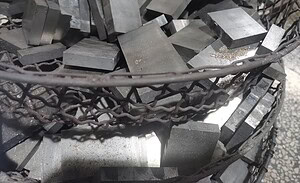
Schneiden von harten und spröden Materialien wie optisches Glas, Die Verwendung von Saphir, Hochleistungskeramik und Siliziumkarbid stellt in vielen Fertigungsprozessen nach wie vor einen entscheidenden, aber anspruchsvollen Schritt dar.
Im Vergleich zu duktilen Metallen reagieren diese Werkstoffe deutlich empfindlicher auf schnittbedingte Spannungen, Vibrationen und lokale Kraftschwankungen. Schon geringe Abweichungen beim Materialabtrag können zu Oberflächenfehlern, Kantenausbrüchen oder Maßabweichungen führen, die später durch Schleifen oder Polieren korrigiert werden müssen.
Infolge, Fertigungsingenieure bewerten Schneidverfahren zunehmend nicht nur nach Durchsatz, sondern auch nach Prozessstabilität und Wiederholbarkeit..
Traditionelle Schneidverfahren und ihre Grenzen
Konventionelle Schneidverfahren für harte und spröde Werkstoffe basieren häufig auf Werkzeugen, die … Richtungsänderungen oder intermittierender Kontakt während des Schneidprozesses. Beispiele hierfür sind das Schneiden mit der Klinge, das schleifunterstützte Schneiden oder andere mechanisch eingeschränkte Werkzeugwege.
Diese Ansätze sind zwar weit verbreitet, beinhalten aber zwangsläufig Folgendes:
- Änderungen der Schnittrichtung oder der Kontaktbedingungen
- Lokalisierte Kraftkonzentration an der Schnittfläche
- Vorübergehende Lastschwankungen beim Ein- und Auskuppeln des Werkzeugs
Aus Sicht der Fertigung können diese Verhaltensweisen Folgendes bedeuten:
- Schwankungen in der Oberflächenkonsistenz
- ungleichmäßige Schnittfugenbildung
- Erhöhte Empfindlichkeit gegenüber Setup- und Parameterabweichungen
- Höhere Abhängigkeit von nachgelagerten Veredelungsschritten
Wenn engere Toleranzen und höhere Ausbeuten gefordert sind, treten diese Einschränkungen deutlicher hervor.
Drahtschneiden als stressarme Alternative
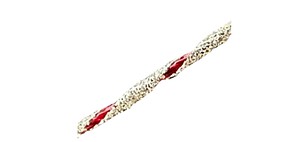
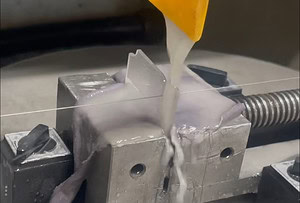
Um die mechanische Belastung beim Schneiden zu reduzieren, Drahtbasierte Schneidverfahren Sie werden häufig für harte und spröde Materialien eingesetzt. Anstatt auf eine starre Schneide zu setzen, trägt ein dünner Schleifdraht das Material durch kontrollierte Schleifwirkung ab.
Zu den wichtigsten Merkmalen des drahtbasierten Schneidens gehören:
- Geringere Schnittkraft im Vergleich zu starren Klingen
- Reduzierte Spannungskonzentration an der Werkstückoberfläche
- Verbesserte Anpassungsfähigkeit an empfindliche oder hochwertige Materialien
Für viele Fertigungsanwendungen bietet das Drahtschneiden ein toleranteres Prozessfenster als das traditionelle Schneiden mit starren Werkzeugen.
Jedoch, Nicht alle Drahtschneidverfahren verhalten sich im Betrieb gleich..
Warum das Bewegungsverhalten von Drähten wichtig ist
Abgesehen von der Wahl des Schneidmediums, Bewegungsverhalten des Drahtes selbst spielt eine bedeutende Rolle für die Prozessstabilität.
Bei Schneidbewegungen mit Richtungsänderungen oder wiederholter Beschleunigung und Verzögerung erfährt die Schneidfläche subtile, aber kontinuierliche Störungen. Im Laufe der Zeit können sich diese Störungen wie folgt äußern:
- Mikrovibrationen in der Schnittzone
- Schwankender Kontaktdruck
- Variationen im abrasiven Eingriff
Bei spröden Werkstoffen können bereits geringfügige dynamische Schwankungen die Oberflächenqualität und -konsistenz beeinflussen.
Dies hat die Fertigungsteams veranlasst zu prüfen, ob eine gleichmäßigere und vorhersehbarere Drahtbewegung könnte den Schneidprozess weiter stabilisieren.
Kontinuierliches Drahtschneiden in eine Richtung: Prozessübersicht
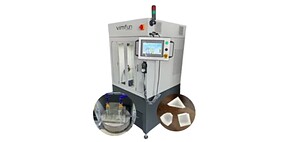
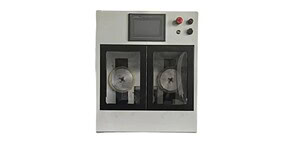
Beim kontinuierlichen Drahtschneiden bildet der Schleifdraht eine geschlossene Schleife und läuft kontinuierlich in eine einzige Richtung während des gesamten Schneidvorgangs.
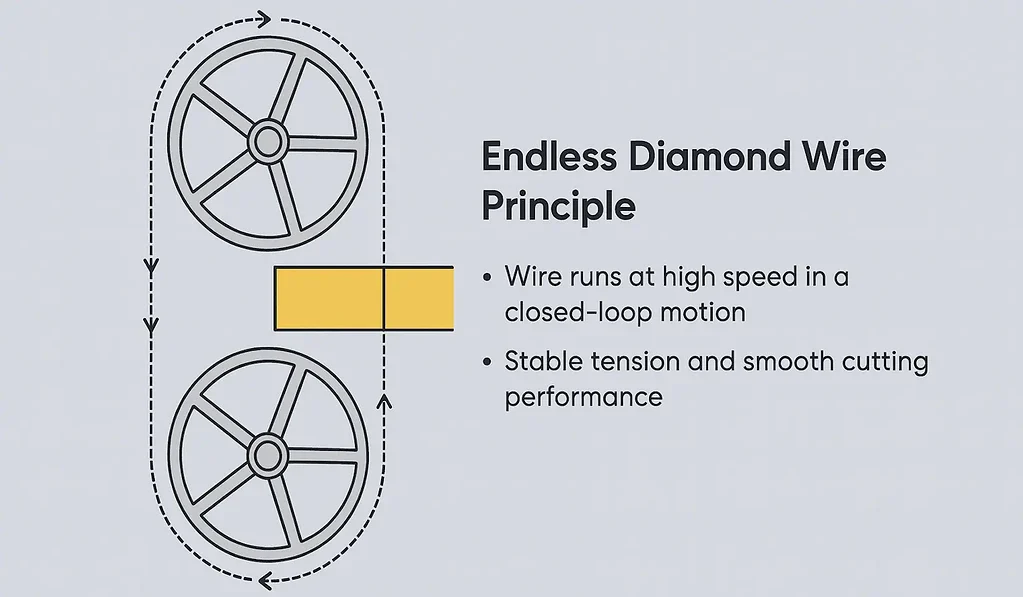
Im Gegensatz zu Bewegungsmustern, die Richtungsänderungen beinhalten, behält die kontinuierliche Drahtbewegung Folgendes bei:
- Konstante Lineargeschwindigkeit durch die Schneidzone
- Stabile Zugbelastung entlang des Drahtes
- Eine gleichmäßige Schneidschnittstelle zwischen Draht und Material
Aus kinematischer Sicht wird der Schneidprozess einfacher und besser vorhersagbar, da weniger transiente Ereignisse das Materialabtragverhalten beeinflussen.
Vorteile für die Fertigung in der Praxis beobachtet
Beim Schneiden harter und spröder Materialien wird die kontinuierliche Drahtvorschubtechnik aufgrund ihres Potenzials häufig gewählt:
- Prozessvariabilität bei langen Schneidzyklen reduzieren
- Verbesserung der Oberflächenkonsistenz über mehrere Teile hinweg
- Eine gleichmäßigere Schnittfugengeometrie beibehalten
- Kantenschäden und Mikroabsplitterungen minimieren
Diese Vorteile sind besonders relevant in Anwendungen, bei denen Wiederholgenauigkeit und Oberflächengüte haben Vorrang vor maximaler Schnittgeschwindigkeit..
Typische Anwendungsfälle sind Präzisionsschneiden, die Herstellung optischer Komponenten und die Bearbeitung fortschrittlicher Materialien, bei denen die Kosten der nachgelagerten Endbearbeitung streng kontrolliert werden müssen.
Technische Überlegungen und Anwendungseignung
Das kontinuierliche Drahtschneiden ist kein universeller Ersatz für alle Schneidverfahren. Seine Eignung hängt von Faktoren wie beispielsweise Folgendem ab:
- Materialhärte und Sprödigkeit
- Erforderliche Oberflächenqualität
- Teilegeometrie und Größe
- Produktionsvolumen und Taktzeit
Für Fertigungsingenieure ist die wichtigste Erkenntnis nicht, dass eine Methode kategorisch “besser” ist, sondern dass Das Bewegungsverhalten von Drähten ist eine wichtige und oft unterschätzte Prozessvariable..
Das Verständnis dafür, wie sich kontinuierliche Bewegung auf die Schnittstabilität auswirkt, kann zu einer fundierteren Prozessauswahl und -optimierung beitragen.
Zusammenfassung
Bei der Bearbeitung harter und spröder Werkstoffe ist die Schnittstabilität zunehmend entscheidend für die Erzielung gleichbleibender Qualität und vorhersehbarer Ausbeute.
Drahtbasiertes Schneiden bietet eine spannungsarme Alternative zu herkömmlichen Methoden mit starren Werkzeugen, und Die kontinuierliche, unidirektionale Drahtbewegung vereinfacht die Schneidschnittstelle zusätzlich, indem richtungsbedingte Störungen eliminiert werden..
Indem Fertigungsteams sich auf das Bewegungsverhalten und nicht nur auf den Werkzeugtyp konzentrieren, können sie Schneidverfahren besser bewerten, die mit ihren Zielen hinsichtlich Prozessstabilität und Qualität übereinstimmen.