
Was ist
Schneiden von Diamantdraht
Wie das Schneiden von Diamantdraht funktioniert und warum es für Präzisionsmaterialien wichtig ist
Das Diamantdrahtschneiden ist ein Präzisionsbearbeitungsverfahren, bei dem ein dünner Stahldraht, der mit industriellen Diamantschleifmitteln beschichtet ist, zum Schneiden verwendet wird. harte, spröde und hochwertige Materialien.
Anstatt das Werkstück wie ein Sägeblatt zu durchtrennen, führen die Diamantpartikel folgende Schritte aus: Mikroabrasives Schneiden, indem das Material schrittweise und sauber entfernt wird.
Dieses Verfahren eignet sich ideal für Werkstoffe, die hitzeempfindlich sind, zum Absplittern neigen oder eine extrem hohe Maßgenauigkeit erfordern.
Hauptmerkmale:
Ultradünne Schnittfuge (bis zu 0,35 mm)
Geringe Schnittkraft und geringe Spannung
Keine thermischen Schäden oder Mikrorisse
Ausgezeichnete Oberflächengüte
Kompatibel mit nahezu allen harten und spröden Materialien
Wie funktioniert das Schneiden von Diamantdraht?
Diamantdrahtschneiden ist im Grunde eine Kombination aus extrem scharfen Diamantschleifpartikeln und Hochgeschwindigkeitsdraht
1. Abrasiver Mikroschneidmechanismus
Jedes einzelne Diamantkorn auf dem Draht wirkt wie ein mikroskopisches Schneidwerkzeug.
Während sich der Draht mit hoher Geschwindigkeit bewegt, tragen diese Körner winzige Materialmengen ab und bilden so einen sauberen und schmalen Schnitt.
Dies ist ein Kaltschneideverfahren, Bedeutung:
Keine Wärmeeinflusszone (WEZ)
Kein Schmelzen oder Verbrennen
Keine thermischen Spannungen oder Risse
Dadurch eignet es sich perfekt für optische Materialien, Keramik, Kristalle und Verbundwerkstoffe.
2. Drahtvorschubgeschwindigkeit und -geschwindigkeit
Drahtgeschwindigkeit:
Endlosschleifendrähte laufen mit extrem hohen Geschwindigkeiten, bis zu 80 m/s, was ein scharfes und schnelles Schneiden gewährleistet.
Vorschubgeschwindigkeit:
Wird durch die Materialhärte bestimmt. Beispiele:
Optisches Glas: ~10 mm/min
Graphit: viel schneller
Saphir, Keramik: Langsamere Zufuhr für beste Qualität
Die Abstimmung von Drahtvorschubgeschwindigkeit und Zuführgeschwindigkeit ist entscheidend für optimale Qualität und maximalen Durchsatz.
3. Spannungsregelung
Die richtige Spannung hält den Draht:
Gerade
Stabil
Genau
Scharf beim Schneiden
Typische Spannungswerte für Präzisionsschnitte:
0,4 mm Draht → 120–130 N
0,5 mm Draht → 130–140 N
Höhere Spannung erhöht Genauigkeit und Geschwindigkeit, während niedrigere Spannung den Drahtverschleiß verringert.
Automatische Spannsysteme gewährleisten eine gleichbleibende Leistung während des gesamten Schnittvorgangs.
4. Die Kraft des endlosen (Schleifen-)Diamantdrahts
Traditioneller Diamantdraht ist offenes Ende und müssen sich hin und her bewegen. Dies bringt mehrere Nachteile mit sich.
Endloses Diamantseil löst diese Probleme.
Indem man die Enden zu einer geschlossenen Schlaufe verbindet, kann der Draht verlaufen:
kontinuierlich in eine Richtung
Bei extrem hohen Geschwindigkeiten – bis zu 80 m/s
Bei stabiler Spannung
Mit glatteren, saubereren Schnittergebnissen
Dies ist das Kernprinzip moderner, hochpräziser Diamantdrahtsägen.
Das Diamantdrahtschneidverfahren
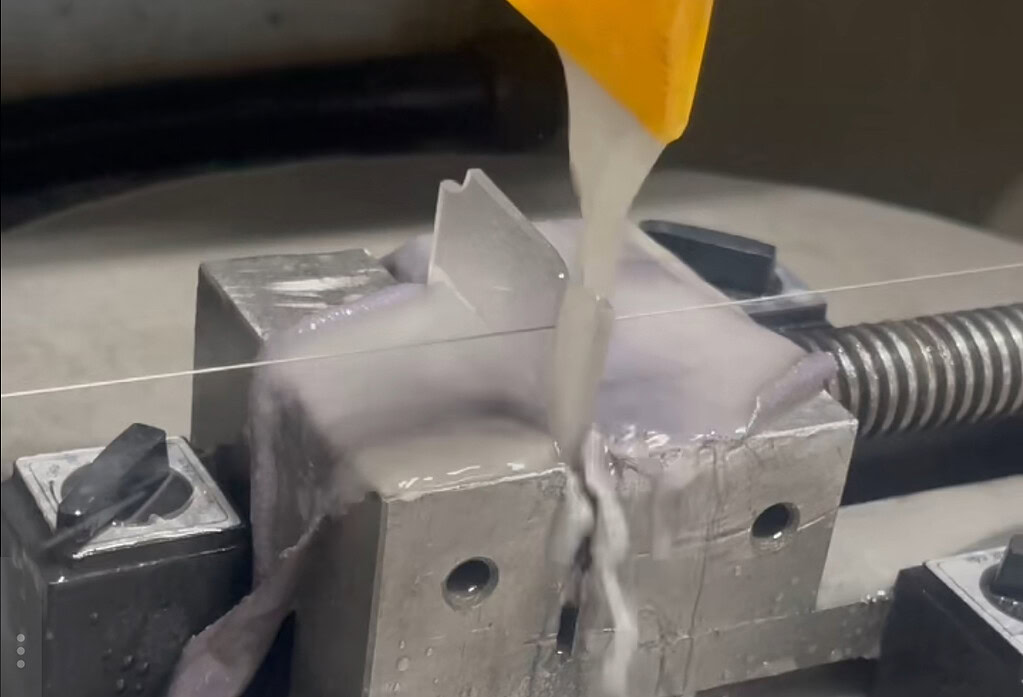
1. Werkstückmontage
Das Werkstück wird mit Klemmen, Vorrichtungen oder Klebstoff fixiert.
Eine ebene Basis verbessert die Genauigkeit und verringert die Winkelabweichung.
2. Einstellen der Schnittparameter
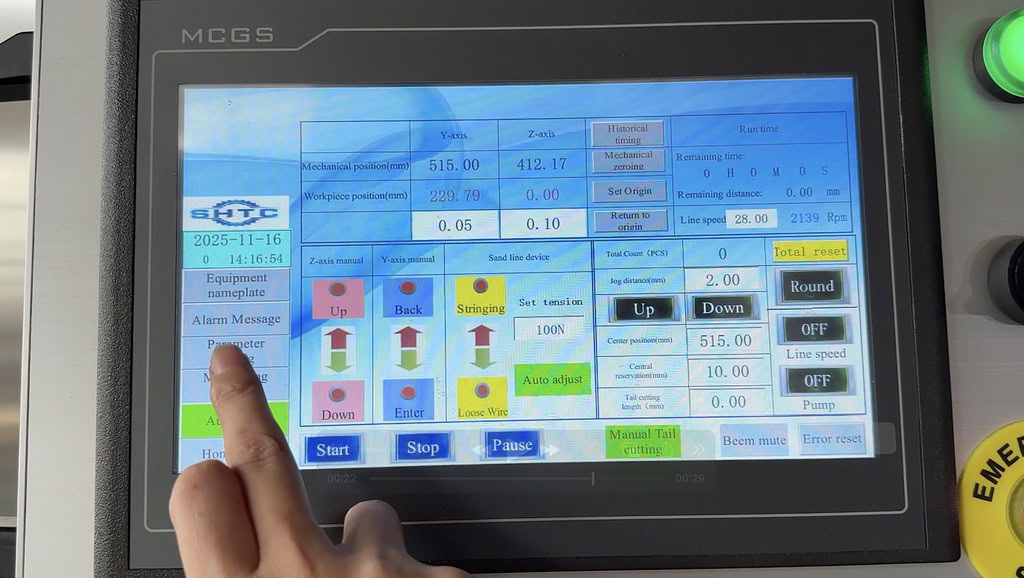
Die Bediener konfigurieren:
Startposition (X/Y/Z)
Schnitttiefe
Schnittdicke oder Anzahl der Schnitte
Drahtgeschwindigkeit
Vorschubgeschwindigkeit
Spannung (basierend auf dem Drahtdurchmesser)
Diese Parameter beeinflussen direkt die Oberflächengüte, die Bearbeitungszeit und die Genauigkeit.
3. Kühlung und Schmierung
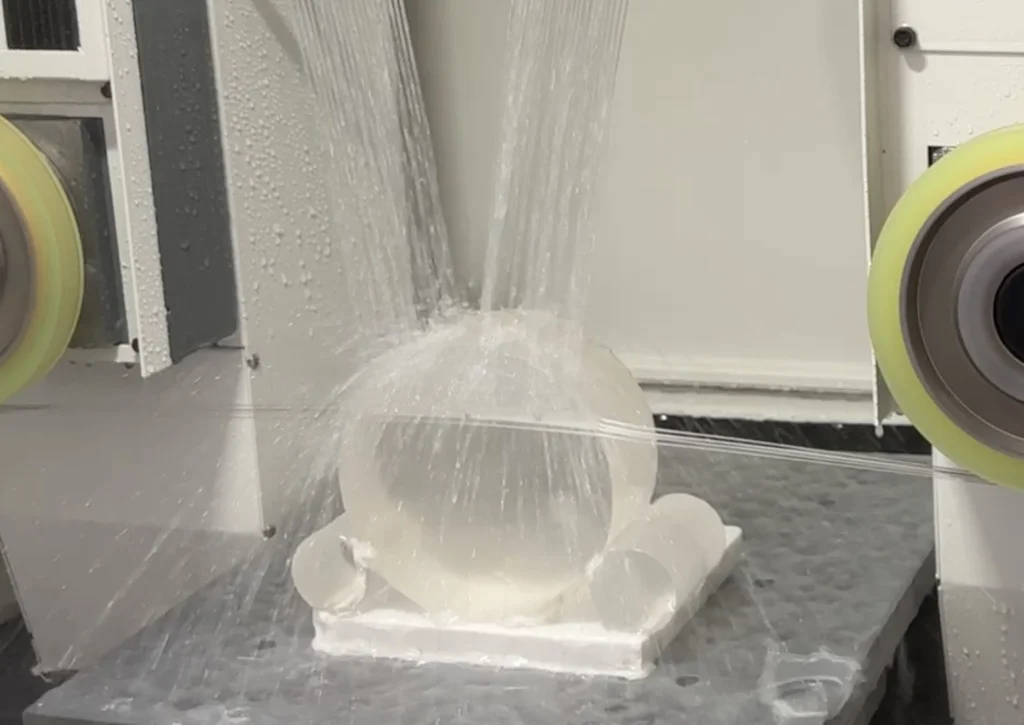
Kühlflüssigkeit entfernt Ablagerungen, reduziert die Reibung und verlängert die Lebensdauer der Drähte.
Empfohlene Flüssigkeiten:
Weißes Mineralöl
Industrieweißöl
Je nach Anwendungsfall sind sowohl wasserbasierte als auch ölbasierte Kühlung akzeptabel.
4. Ausführung der Kürzungen
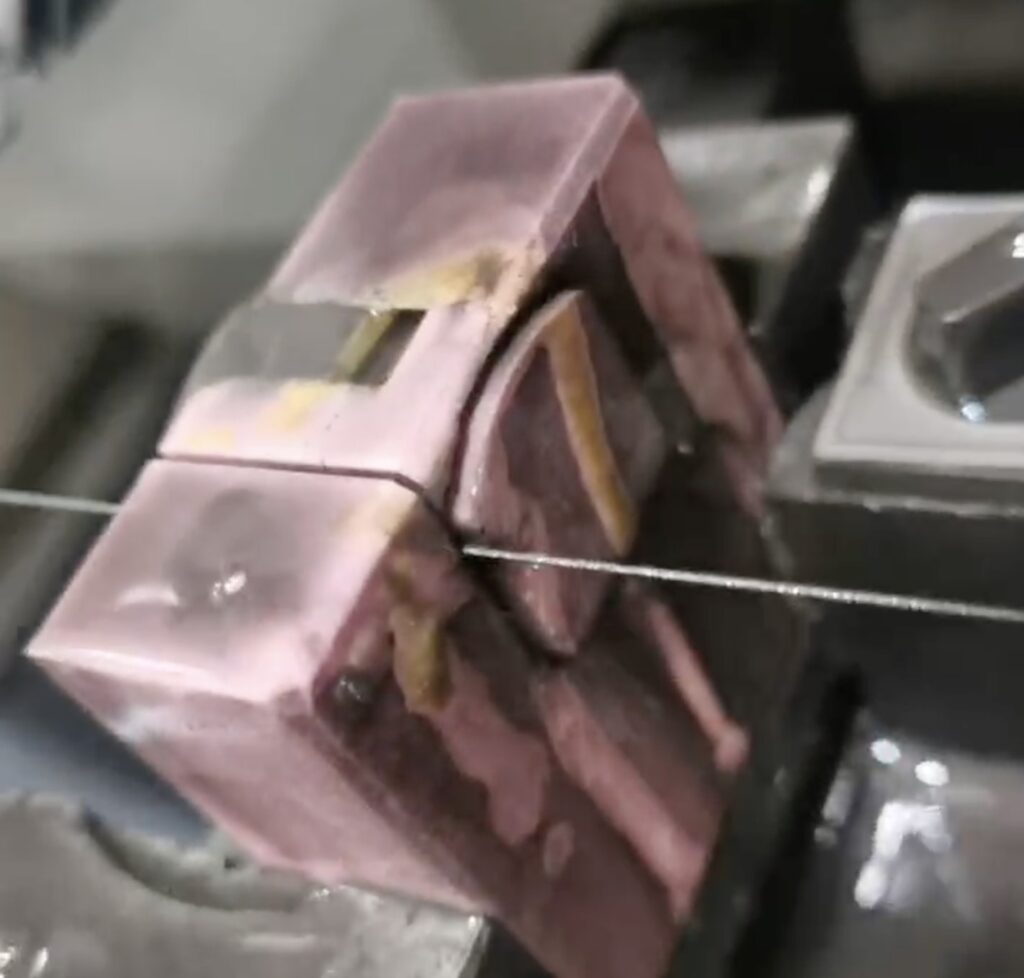
Nach dem Start:
Die Maschine führt das Werkstück automatisch zu.
Der Draht bewegt sich kontinuierlich mit hoher Geschwindigkeit
Die Kühlung zirkuliert durch die Schnittzone.
Sensoren überwachen die Drahtbewegung
Moderne Maschinen umfassen Drahtbruchschutz, wodurch die Maschine sofort gestoppt und Schäden verhindert werden.
5. Abschluss und Zurücksetzen
Nach Abschluss der Arbeiten:
Der Draht stoppt
Achsen kehren zum Ursprung zurück
Der Bediener entfernt das Werkstück.
Bewährte Vorgehensweise: Die Drahtspannung beim Abschalten lösen um die Lebensdauer des Führungsrades zu verlängern.

Welche Materialien lassen sich mit Diamantdraht schneiden?
Das Diamantdrahtschneiden eignet sich für nahezu alle harten und spröden Materialien, einschließlich:
Optisches Glas
Saphir
Siliciumcarbid (SiC)
Quarz
Keramik (Al₂O₃, ZrO₂)
Graphit
Germaniumkristalle
Grüne Keramik
Zusammengesetzte Materialien
Diamant ist das härteste bekannte Material und kann daher alles schneiden, was weicher ist als er selbst.
Vorteile des Diamantdrahtschneidens
1. Ultradünne Schnittfuge
Die Schnittfugenbreite kann so schmal sein wie 0,35 mm.
Dadurch wird der Materialverbrauch drastisch reduziert, insbesondere bei teuren optischen oder Halbleitermaterialien.
2. Hohe Präzision
Diamantdrahtmaschinen erreichen regelmäßig folgende Ergebnisse:
±0,03 – ±0,05 mm Genauigkeit
Glatte, ebene Oberflächen
Hervorragende Parallelität und Winkelkontrolle
3. Hervorragende Oberflächenqualität
Sehr geringe Drahtmarkierungen
Keine umgekehrten Muster (da der Draht niemals die Richtung ändert).
Minimale Mikrorissbildung
Extrem saubere, gleichmäßige Oberflächen
Kontinuierliche Beschichtungsdrähte sind besonders effektiv für Glas- und optische Anwendungen.
4. Höhere Schnittgeschwindigkeiten
Endlosschleifendrähte, die mit bis zu 80 m/s liefern:
Höherer Durchsatz
Kürzere Zykluszeiten
Reduzierte Verarbeitungskosten
5. Längere Lebensdauer des Drahtes
Typische Beispiele für die Lebensdauer von Drähten:
Graphit: ≈ 7 Tage (8 Stunden/Tag)
Optisches Glas: ≈ 3–4 Tage
Endlosdraht weist einen geringeren Verschleiß auf, da die Belastung durch das Umkehren vermieden wird.
Diamantdrahtschneiden im Vergleich zu anderen Schneidverfahren
| Verfahren | Vorteile von Diamantdraht |
|---|---|
| Drahtschneiden mit Schlamm | Saubererer Prozess, einfachere Ausrüstung, keine Schlammverunreinigung |
| Sägeblatt | Dünnere Schnittfuge, weniger Ausbrüche, besser geeignet für spröde Materialien |
| Laser schneiden | Keine Hitzeeinwirkungszone, glattere Kanten, kein Anbrennen |
Häufige Probleme beim Diamantdrahtschneiden
1. Drahtbruch
Typische Ursachen:
Übermäßiger Verschleiß
zu hohe Spannung
Zu hohe Vorschubgeschwindigkeit
Gebrauchsspuren:
Die Schneidezeit verlängert sich
Der Draht beginnt sich leicht zu biegen.
Lösungen:
Reduziere die Vorschubgeschwindigkeit
Die Spannung im letzten Schritt leicht erhöhen.
Verschleißte Führungsrollen ersetzen
2. Schnittabweichung
Üblicherweise verursacht durch:
Drahtbiegen
Übermäßige Geschwindigkeit
Ungleichmäßige Werkstückmontage
Lösungen:
Langsamere Zufuhr
Spannung stabilisieren
Sorgen Sie für eine ebene Montagefläche.
3. Mangelhafte Oberflächenbeschaffenheit
Verbesserungsmöglichkeiten:
Verwenden Sie einen kleineren Drahtdurchmesser (0,3 mm).
Reduziere die Vorschubgeschwindigkeit
Verwendung einer durchgehenden Diamantbeschichtung
Für ausreichende Kühlung sorgen
Vimfun Diamant-Draht-Säge
Wer verwendet Schneiddraht für Diamanten?
Diamantdrahtschneiden wird häufig eingesetzt, wo Präzision und Materialwert sind entscheidend.
- Halbleiter & Elektronik
- Optische Fertigung
- Saphirsubstratproduktion
- Neue Energiematerialien
- Bearbeitung von Graphit- und Kohlenstoffwerkstoffen
- Keramik- und Verbundwerkstoffe
- Forschungslabore und Universitäten
Bereit, Ihren Schneidprozess zu optimieren?
✔ Benötigen Sie Empfehlungen für Ihr Material?
Unsere Ingenieure können Ihnen den optimalen Drahtdurchmesser, die optimale Drahtspannung und die optimale Maschinenkonfiguration vorschlagen.
✔ Möchten Sie einen Probeschnitt?
Wir bieten Kostenloses Musterschneiden zur Bewertung von Qualität und Effizienz.
✔ Interessiert an der Technologie der endlosen Diamantdrahtsäge?
Fordern Sie Spezifikationen, Kataloge oder ein Beratungsgespräch mit unseren Anwendungstechnikern an.
Arten von Diamantschneiddraht
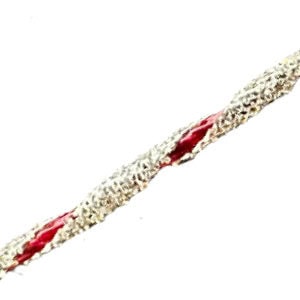
Gewindebeschichteter Schneidedraht Säge
- Drahtdurchmesser (mm): 0,55-1,0 mm
- Drahtlänge (m): 1-10
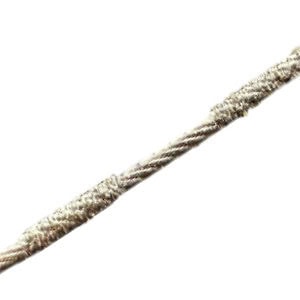
Segmentbeschichtete Schneidedrahtsäge
- Drahtdurchmesser (mm): 0,65-3,5 mm
- Drahtlänge (m): 1-10
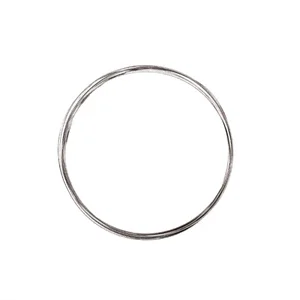
DRAHTSÄGE
- Drahtdurchmesser (mm): 0.65
- Drahtlänge (mm): 700 – 10000
Diamant-Drahtsäge mit Schlaufen
- Drahtdurchmesser (mm): 0.3
- Drahtlänge (mm): 700 – 10000
Schleifenförmiger Diamantdraht - 0,3 mm
- Drahtdurchmesser (mm): 0.3
- Drahtlänge (mm): 700 – 10000
Reifenschneidedraht
- Drahtdurchmesser (mm): 2,0 mm
- Drahtlänge (mm): 4500 mm