Введение: Точность обеспечивается систематическим техническим обслуживанием.
Высокая точность алмазная проволока Пилы — это сложное технологическое оборудование, работоспособность которого в значительной степени зависит от координации и стабильности различных подсистем. В условиях высокой линейной скорости и высокого натяжения даже, казалось бы, незначительный механический износ или аномалии в системе охлаждения могут существенно повлиять на качество резки.
Цель технического обслуживания не ограничивается устранением неисправностей после их возникновения. Что еще важнее, речь идет о поддержании стабильности оборудования в течение длительной эксплуатации посредством стандартизированных и предсказуемых стратегий технического обслуживания. По сравнению с реактивным реагированием после отказа, Профилактическое техническое обслуживание (ПТО) помогает снизить риск незапланированных простоев и поддерживает стабильность качества резки.
Многие проблемы, связанные с долгосрочным техническим обслуживанием, в конечном итоге обусловлены механическая конструкция алмазной проволочной пилы, включая системы привода, натяжения и направляющих колес.
1. Важные компоненты: Система управления состоянием направляющего колеса
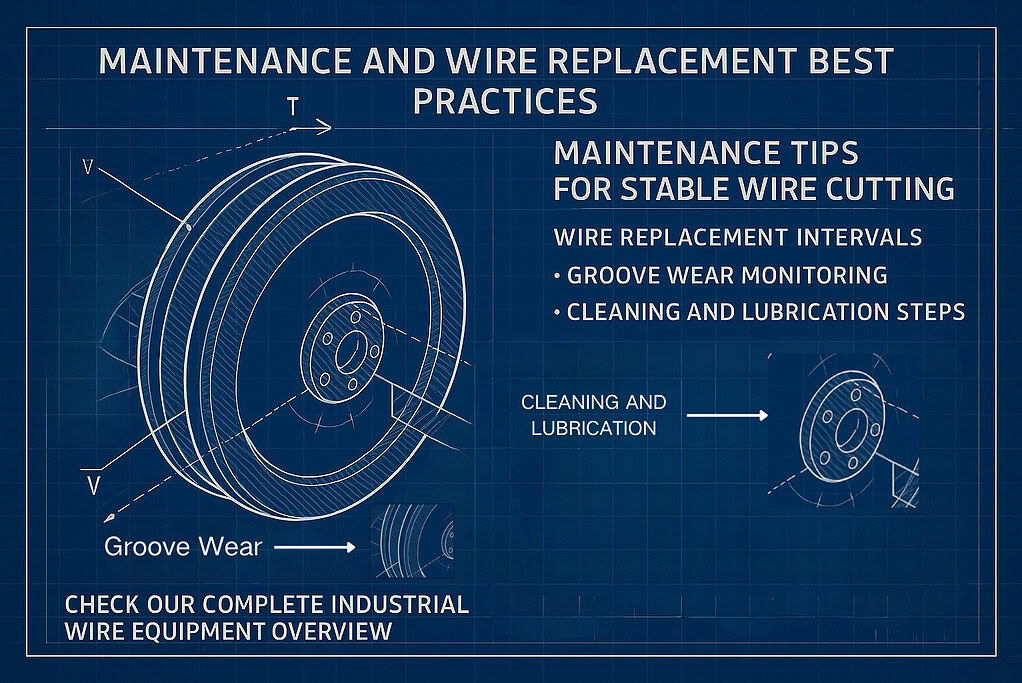
Направляющие колеса Они играют решающую роль в передаче движения и ограничении траектории резания. Их геометрическое состояние напрямую влияет на стабильность движения проволоки и качество поверхности реза.
1.1 Износ канавок
Алмазная проволока обычно движется в канавках, облицованных полиуретаном (ПУ) или резиной. При длительной эксплуатации на дне канавки постепенно образуется износ.
- Потенциальное воздействие: При значительном изменении формы канавки снижается способность к боковому ограничению, что может привести к вибрации или аномальной текстуре поверхности во время резки.
- Рекомендация по проведению проверки: Регулярно проверяйте форму канавки с помощью калибра для канавок или микроскопа. Если профиль канавки значительно отклоняется от исходной геометрии, следует рассмотреть возможность замены или перешлифовки направляющего колеса.
1.2 Подшипники и биение
При высокоскоростном вращении направляющие колеса предъявляют строгие требования к состоянию подшипников.
- Радиальное биение: Может вызывать периодическое смещение проволоки во время резки (следы от ударов).
- Осевое биение: Может повлиять на прямолинейность траектории резки (что приводит к волнообразности).
- Рекомендации по техническому обслуживанию: Регулярно проверяйте биение направляющего колеса с помощью индикатора часового типа и незамедлительно заменяйте подшипники при обнаружении отклонений.
Износ и биение направляющих колес являются структурными проблемами, которые напрямую влияют на стабильность проволоки и точность резки.
2. График профилактического технического обслуживания (справочник)
Ежедневные проверки (на уровне оператора)
- Форсунки системы охлаждения: Убедитесь, что они чистые и не засорены.
- Состояние проводов: Проверьте поверхность проволоки на наличие аномального износа (сужения) или отслоения покрытия.
- Пневматическое давление: Убедитесь, что давление в системе натяжения стабильно.
- Уборка: Убедитесь, что рабочая зона чистая, чтобы предотвратить скопление и затвердевание суспензии.
Еженедельные проверки (уровень технической поддержки)
- Вращение направляющего колеса: Проверьте плавность вращения и наличие посторонних шумов (неисправность подшипника).
- Геометрическая точность: Проверьте перпендикулярность подачи по оси Z относительно рабочего стола.
- Качество охлаждающей жидкости: Проверьте значение pH и концентрацию, чтобы предотвратить рост бактерий или образование ржавчины.
Ежемесячные или ежеквартальные проверки (уровень технического обслуживания)
- Система трансмиссии: Проверьте натяжение и состояние приводных ремней или компонентов трансмиссии.
- Электрощит: Проверьте внутреннюю чистоту и состояние вентиляторов системы охлаждения.
- Датчики: Проверьте состояние калибровки датчиков натяжения и критически важных элементов обнаружения.
3. Систематическая логика поиска и устранения неисправностей
Сценарий 1: Обрыв проволоки во время резки
- Возможные причины:
- Проволока достигла предела своего ресурса усталости (естественный износ).
- Несоответствие условий натяжения или подачи (перегрузка).
- Недостаточное охлаждение (прогорание проволоки).
- Неустойчивая фиксация заготовки (смещение детали и защемление проволоки).
- Методика устранения неполадок: Для всестороннего анализа необходимо учитывать морфологию разрушения, данные журналов параметров оборудования и состояние заготовки. Не следует приписывать отказ одному фактору без проведения анализа.
Сценарий 2: Волнистость или неровная текстура на срезе.
- Возможные причины:
- Колебания напряжения.
- Неисправное состояние направляющего колеса или подшипника (биение).
- Недостаточная жесткость крепления оборудования или устойчивость фундамента (резонанс).
- Методика устранения неполадок: Последовательно проверяйте герметичность системы натяжения, геометрическое состояние направляющих колес и общую вибрацию машины.
Сценарий 3: Конусность (клиновидный срез)
- Возможные причины:
- Смещение направляющего колеса (проволочная стенка не перпендикулярна).
- Слишком высокая скорость подачи приводит к отклонению проволоки (чрезмерному углу изгиба).
- Смещение крепежных элементов или склеиваемых деталей во время резки (тепловой дрейф).
4. Вопросы электротехники и управления (обзор)
Даже при нормальных механических условиях отклонения в системе управления или сигналах датчиков могут влиять на стабильность резания.
- Сигналы тревоги сервоприводов: Обычно это связано с чрезмерной нагрузкой, высоким сопротивлением или механическим заклиниванием.
- Сигнализация перегрузки: Возможно, это связано с удлинением проволоки (необходимо ее укоротить) или с тем, что механизм натяжения достиг предела своего хода.
- Колебания кормления: Иногда это связано с шумом в сигнале датчика или состоянием заземления, что мешает работе адаптивной логики управления.
Рекомендация: Для комплексного анализа в процессе поиска и устранения неисправностей совместите данные из журналов учета работы оборудования с информацией о состоянии объекта.
5. Хранение и обращение с алмазной проволокой
- Хранилище: Проволоку следует хранить в сухом месте, избегая длительного воздействия влажного воздуха (что предотвращает образование ржавчины в сердечнике).
- Умение обращаться: Во время установки избегайте чрезмерного изгиба или перекручивания провода.
- Вламываться: Для начального периода приработки новой проволоки рекомендуется использовать более щадящие условия процесса (более низкую скорость подачи).
Заключение
Стабильная работа алмазной проволочной пилы зависит от синергетического взаимодействия множества систем. Благодаря систематическому профилактическому техническому обслуживанию, стандартизированным процессам проверки и логичной диагностике неисправностей, риски незапланированных простоев могут быть эффективно снижены, а качество резки — стабильно высоким.
В процессах высокоточной резки техническое обслуживание не является дополнительной задачей, а неотъемлемой частью обеспечения стабильности процесса.
Часто задаваемые вопросы (FAQ)
В1: Как часто необходимо заменять направляющие ролики колес?
Частота замены зависит от интенсивности эксплуатации и типа материала. Как правило, рекомендуется осматривать их каждые 300-500 часов. Замена необходима, если геометрия канавок значительно изменяется (появляются видимые глубокие канавки).
В2: Какова распространенная причина обрыва проводов сразу после запуска?
Чрезмерное ускорение или высокая начальная ударная нагрузка являются распространенной причиной. Рекомендуется проверить “Мягкий старт” Настройки параметров для увеличения времени разгона.
Вопрос 3: Можно ли использовать оборванный провод повторно?
В некоторых случаях это технически осуществимо (например, с помощью стыковой сварки), но каждая точка соединения снижает общую надежность. Для дорогостоящих изделий (например, оптического стекла) или изделий с высоким риском обычно рекомендуется использовать новую проволоку для обеспечения безопасности.