Руководство по технологическим процессам алмазной проволочной резки
1. Охлаждение и смазка при высокоскоростной алмазной проволочной резке: трибологический аспект.
При высокоточной обработке твердых и хрупких материалов, таких как карбид кремния (SiC), сапфир, оптическое стекло и магниты NdFeB, алмазная проволока сама по себе представляет лишь часть системы резки. Другая, часто недооцениваемая, половина — это Охлаждение и смазка.
На микроскопическом уровне, алмазная резка проволоки Это интенсивное трибологическое воздействие. Отдельные алмазные зерна, движущиеся со скоростью 50–60 м/с, многократно ударяются о поверхность заготовки. Каждое взаимодействие вызывает локальное трение, пластическую деформацию и микротрещины.
Хотя температура обрабатываемой детали может казаться стабильной, температура вспышки на границе раздела алмаз-материал может на мгновение превысить 800 °C. При этих температурах:
- Алмаз уязвим для графитизация, это резко ускоряет износ проволоки.
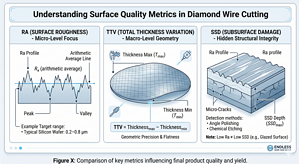
- Температурные градиенты вызывают микронапряжения в хрупких субстратах, увеличивая риск Подземные повреждения (SSD).
- Повышенное трение увеличивает силу резания и дестабилизирует движение проволоки.
По этой причине, Система охлаждения и смазки не является вспомогательной системой.. Это ключевая переменная процесса, которая напрямую определяет:
- Срок службы алмазной проволоки
- Шероховатость поверхности (Ra)
- глубина повреждений под поверхностью
- Стабильность и повторяемость резки
2. Охлаждающие и смазочные жидкости: термодинамика систем на водной и масляной основе.
Выбор смазочно-охлаждающей жидкости по сути представляет собой компромисс между холодопроизводительность и смазывающая способность. Ни одна жидкость не обладает обоими свойствами в полной мере.
Охлаждающие жидкости на водной основе (водные растворы)
С термодинамической точки зрения, воде нет равных.
- Удельная теплоемкость (Cp): ~4,18 Дж/г·К
- Исключительная способность поглощать и отводить тепло от зоны резки.
Благодаря этому системы на водной основе идеально подходят для применений, чувствительных к температуре, таких как:
- Нарезка кремниевых и карбидкремниевых пластин
- Сапфир и оптические подложки
- Тонкие компоненты или компоненты с большим соотношением сторон, склонные к деформации.
Современные охлаждающие жидкости на водной основе представляют собой специально разработанные жидкости, а не обычную воду. Типичные составы включают:
- Поверхностно-активные вещества для снижения поверхностного натяжения и улучшения смачивания проволоки и пропила
- Ингибиторы ржавчины для защиты стальных и железных компонентов машин
- Хелатирующие агенты для предотвращения агломерации стружки
Без этих добавок чистая вода часто вызывает коррозию, нестабильную смазку и плохое удаление загрязнений.
Охлаждающие жидкости на масляной основе (чистые масла)
В жидкостях на масляной основе трибологические свойства имеют приоритет над термодинамикой.
- Начальство смазывающая способность, образует гидродинамическую пленку, которая снижает трение (меньшее значение μ).
- Более высокая вязкость улучшает суспензирование и транспортировку более тяжелых частиц мусора.
Системы на масляной основе обычно выбирают по следующим причинам:
- Магнитные материалы, такие как NdFeB
- Сплавы, чувствительные к окислению
- Области применения, требующие более “мягкого” характера резания для предотвращения хрупкого разрушения.
Однако у охлаждения на основе масла есть свои недостатки:
- Более низкое тепловыделение (~2,0 Дж/г·К)
- Более сложная постобработка после очистки
- Потенциальный риск возгорания при повышенных температурах вспышки.
На практике выбор жидкости должен отражать следующее: терморегулирование или преобладание смазки Это основное требование.
3. Гидродинамика охлаждения и смазки: преодоление барьера высокоскоростного воздушного потока.
Одним из наиболее распространенных скрытых видов неисправностей при резке алмазной проволокой является Жидкостное голодание, даже когда насосы работают на полную мощность.
Эффект воздушного барьера
При высоких скоростях движения проволоки за счет поверхностного трения в нее втягивается пограничный слой воздуха. Это создает локализованное явление. аэродинамический щит вокруг проволоки. Это явление воздушного барьера тесно связано с непрерывным однонаправленным движением, которое подробно объяснено в нашей работе. инженерный анализ бесконечной петли резки.
Если давление охлаждающей жидкости недостаточно:
- Жидкость отскакивает от воздухонепроницаемого барьера.
- Практически полное отсутствие охлаждающей жидкости достигает места контакта проволоки и заготовки.
- Стрижка переходит в почти сухое состояние.
В результате происходит быстрый перегрев, ускоренная деградация алмаза и частые обрывы проволоки.
Разработка решения: Целевая высокоскоростная доставка
Для эффективного охлаждения и смазки требуется кинетическая энергия, не только по объему.
Ключевые инженерные принципы включают в себя:
- Скорость струи должно быть достаточно для проникновения через пограничный слой воздуха.
- Ориентация сопла следует ориентироваться на точка ввода провода, где трение и тепловыделение достигают пика.
- Перелив из-за давленияСфокусированная струя высокого давления превосходит по эффективности затопление при низком давлении.
Грамотно спроектированные системы форсунок преобразуют подачу охлаждающей жидкости из пассивного промывания в активный механизм управления технологическим процессом.
4. Поток смазки и удаление стружки в сверхузких пропилах
Алмазная проволочная резка позволяет получать пропилы шириной до нескольких сантиметров. 0,35 мм или менее. В случае с жидкостями этот пропил ведет себя как микроскопический гидравлический канал.
Образование стружки и загрузка проволоки
В процессе резки непрерывно образуется микроскопическая стружка. Если ее не удалить немедленно:
- Между алмазными зернистыми частицами скапливается стружка.
- Провод становится загружено, теряя эффективность резки
- Мусор начинает не срезать, а тереть, вызывая вторичный износ и царапины на поверхности.
Поддержание эффективного потока смазки
Для обеспечения чистоты резки инженеры должны гарантировать непрерывное проникновение и удаление жидкости внутри пропила. К таким стратегиям относятся:
- Оптимизированное расположение сопла для обеспечения притока и оттока жидкости из выемки
- Системы осциллирующего распыления для покрытия всей зоны контакта проволоки при глубоких разрезах
- Диспергирующие добавки чтобы частицы оставались во взвешенном состоянии и не оседали.
Таким образом, эффективное охлаждение и смазка неразрывно связаны с удалением мусора.
5. Фильтрация охлаждающей жидкости: незаметный, но важный элемент высокоточной резки.
Переработка охлаждающей жидкости без надлежащей фильтрации подрывает весь процесс.
При рециркуляции охлаждающей жидкости она переносит абразивную пыль — часто из таких материалов, как карбид кремния или сапфир — обратно в зону резания. Эти частицы действуют как неконтролируемые абразивы.
Если размер рециркулирующей частицы составляет 10 мкм, а размер алмазного выступа — всего 15 мкм, то эта частица становится неисправный режущий инструмент, что приводит к появлению случайных царапин и ускоренному износу.
Многоступенчатая стратегия фильтрации
Надежная система охлаждения и смазки включает в себя многослойную фильтрацию:
- Магнитная сепарация для ферромагнитных обломков
- Циклонная сепарация удаление основной массы осадка с помощью центробежной силы
- Фильтрация тонкой бумагой или мешочным фильтром для окончательной полировки
Общее правило:
Если размер алмазной крошки составляет 10–20 мкм, то фильтрация должна быть следующей. ≤ 5 мкм.
Чистая жидкость — это не роскошь, а необходимое условие для целостности поверхности. Охлаждение и смазка
Заключение
В высокопроизводительных алмазная резка проволоки, Проволока обеспечивает режущее действие, но Охлаждение и смазка обеспечивает жизнеобеспечение.
Оптимизация этой системы требует целостного инженерного подхода:
- Выбор рабочих жидкостей на основе термодинамических и трибологических приоритетов.
- Разработка гидродинамических систем, способных преодолевать аэродинамические барьеры.
- Обеспечение стабильного потока смазки и удаления стружки.
- Обеспечение строгой чистоты охлаждающей жидкости за счет прецизионной фильтрации.
Только когда эти элементы работают вместе, можно по-настоящему чистая резка должны быть достигнуты результаты, определяемые низким уровнем повреждения подповерхностного слоя, увеличенным сроком службы проволоки, стабильными силами резания и превосходным контролем TTV.
Разработана ли ваша стратегия охлаждения и смазки для обеспечения более чистого реза?
Часто задаваемые вопросы – Охлаждение и смазка при резке алмазной проволокой
В1: Можно ли использовать чистую воду в качестве охлаждающей жидкости?
В целом, нет. Чистая вода не обладает смазывающими свойствами, не содержит ингибиторов коррозии и поверхностно-активных веществ. Она часто вызывает коррозию оборудования, нестабильное режущее поведение и плохое удаление стружки. Необходимы специальные присадки к охлаждающей жидкости.
В2: Как часто следует менять охлаждающую жидкость?
Интервалы замены зависят от объема режущего материала и эффективности фильтрации. Необходимо контролировать pH, электропроводность и вязкость охлаждающей жидкости. При отклонении этих параметров от заданных значений качество режущего материала ухудшается.
В3: Почему моя алмазная проволока часто ломается, несмотря на правильное натяжение?
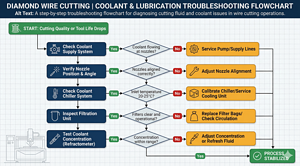
Недостаток охлаждающей жидкости — распространённая скрытая причина. Неправильно установленные или засоренные форсунки могут препятствовать поступлению жидкости к месту ввода проволоки, что приводит к локальному перегреву и снижению прочности на разрыв.
Вопрос 4: Какую охлаждающую жидкость выбрать — на масляной или на водной основе?
Системы на водной основе превосходно отводят тепло и предпочтительны для полупроводниковых и оптических материалов. Системы на масляной основе обеспечивают лучшую смазку и часто выбираются для магнитных или чувствительных к окислению материалов. Выбор зависит от того, что является доминирующим требованием: контроль температуры или снижение трения.